
Julie Flore
New member
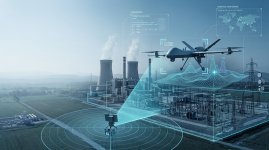
Critical infrastructure forms the backbone of every nation. Airports, power plants, oil and gas facilities, telecommunications networks, water treatment plants, transportation hubs, and government installations all rely on uninterrupted operations to support economic stability and public safety. As unmanned aerial systems (UAS), commonly known as drones, become more capable and widely available, these facilities face a growing challenge: protecting their airspace from unauthorized or potentially hostile aircraft.Commercial drones have brought significant benefits to industries such as construction, agriculture, logistics, and emergency response. However, the same technologies that make drones valuable for legitimate applications can also be exploited for unauthorized surveillance, contraband delivery, operational disruption, or even physical attacks. This shift has prompted governments, security agencies, and infrastructure operators to adopt more advanced counter-drone strategies.
Modern counter-UAS technologies are no longer limited to simply detecting drones. Today's solutions combine intelligent sensors, artificial intelligence, secure command-and-control platforms, and physical interception capabilities to create layered airspace protection. By integrating these technologies, organizations can respond quickly while minimizing operational disruption and reducing risk to surrounding people and property.
Why Critical Infrastructure Is Increasingly Vulnerable
Many critical facilities were designed before small unmanned aircraft became common. Traditional physical security measures—such as perimeter fencing, surveillance cameras, and access control systems—are effective against ground-based threats but offer limited protection against airborne intrusions.Drones can approach from multiple directions, operate at low altitudes, and access areas that would otherwise be difficult to reach. Depending on their payload and purpose, unauthorized drones may be used to:
- Conduct aerial surveillance of restricted facilities.
- Disrupt airport or industrial operations.
- Deliver contraband into secure locations.
- Collect sensitive imagery or operational data.
- Interfere with emergency response activities.
- Support coordinated attacks on critical assets.
Even when a drone causes no physical damage, an unauthorized flight can trigger operational shutdowns, safety investigations, and significant financial losses. For sectors where continuous operation is essential, rapid detection and response are critical.
Understanding Modern Counter-UAS Technologies
A modern counter-UAS strategy focuses on protecting airspace through multiple coordinated layers rather than relying on a single technology. This layered approach improves reliability because no single sensor or mitigation method is effective in every operating environment.An integrated counter-UAS system generally includes four core functions:
Detection
The first objective is identifying an approaching drone before it reaches sensitive airspace. Detection may combine radar, radio-frequency monitoring, electro-optical cameras, infrared sensors, and acoustic technologies to improve coverage under different environmental conditions.Tracking
Once a drone has been detected, the system continuously monitors its location, speed, altitude, and direction. Accurate tracking enables operators to assess whether the aircraft presents a genuine threat and provides the information needed for a timely response.Anti
Not every drone represents malicious activity. Identification systems help distinguish between authorized operations and unauthorized flights by analyzing flight characteristics, sensor data, and available operational information. This step supports informed decision-making while reducing unnecessary responses.Mitigation
If a drone is confirmed as a threat, appropriate mitigation measures can be deployed. Depending on operational requirements and applicable regulations, these measures may include electronic countermeasures, controlled capture systems, or a counter UAS interceptor capable of safely stopping the aircraft before it reaches its intended target.The Growing Role of Drone Interceptor Systems
As autonomous drones become more sophisticated, security operators increasingly recognize that detection alone is not enough. Once a threat has been identified, there must also be a reliable method of preventing it from reaching protected infrastructure.A drone interceptor system is designed specifically for this purpose. Rather than relying solely on communication disruption, an interceptor can physically engage or safely recover an unauthorized drone when circumstances require direct action.
Modern interceptor systems are engineered to operate alongside existing detection technologies, allowing operators to respond quickly while maintaining visibility of the surrounding airspace.
Key capabilities often include:
- Rapid launch and deployment.
- Autonomous or assisted target tracking.
- Integration with radar and optical sensors.
- Precise navigation toward moving targets.
- Low-collateral interception methods suitable for sensitive environments.