
What is RFID in supply chain management? RFID (Radio Frequency Identification) is a technology that uses radio waves to identify and track tagged products, cartons, pallets, and assets as they move through a supply chain. By capturing tag data without requiring direct line of sight, RFID helps businesses improve inventory visibility, verify shipments, and reduce manual scanning.
Unlike a barcode workflow, which typically requires an operator or scanner to see each label, RFID can identify multiple compatible tags within a reader’s detection zone. This makes it particularly useful in busy distribution centers, receiving areas, manufacturing facilities, and retail warehouses where goods move continuously.
The important detail is that a tag read is not automatically proof of a completed business transaction. Reader placement, duplicate-read filtering, shipment records, and software rules all influence whether the event accurately represents what happened.
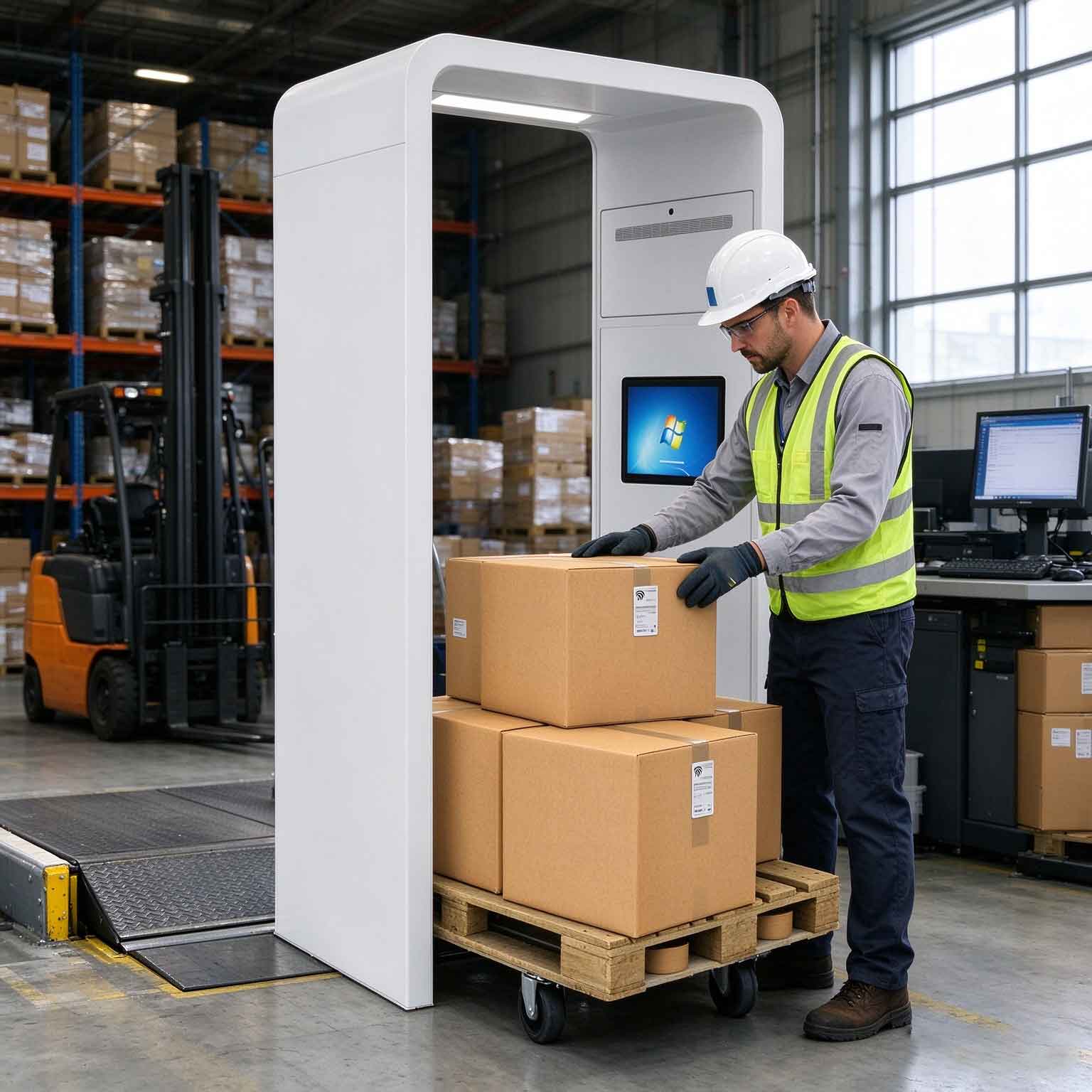 RFID readers capture tagged goods at warehouse receiving points, helping staff compare incoming shipments with expected inventory.
Key operational benefits include:
For supply chain projects using GS1-based identification, the Electronic Product Code (EPC) provides a standardized way to identify tagged objects. GS1’s EPCIS standard supports sharing visibility events between business systems, including information about what moved, when it moved, where it was observed, and the relevant business context.
This distinction matters when a company works with several suppliers, distribution centers, or logistics providers. A reader can capture a tag identifier, but interoperable identification and event data help different organizations interpret the resulting information consistently.
For Cykeo, businesses evaluating fixed UHF RFID readers should assess the required read zone, tag compatibility, interface options, environmental conditions, and integration requirements before selecting hardware. A successful deployment is measured by reliable operational events—not simply by the maximum reading distance stated in a specification.
Before deployment, supply chain teams should evaluate these factors:
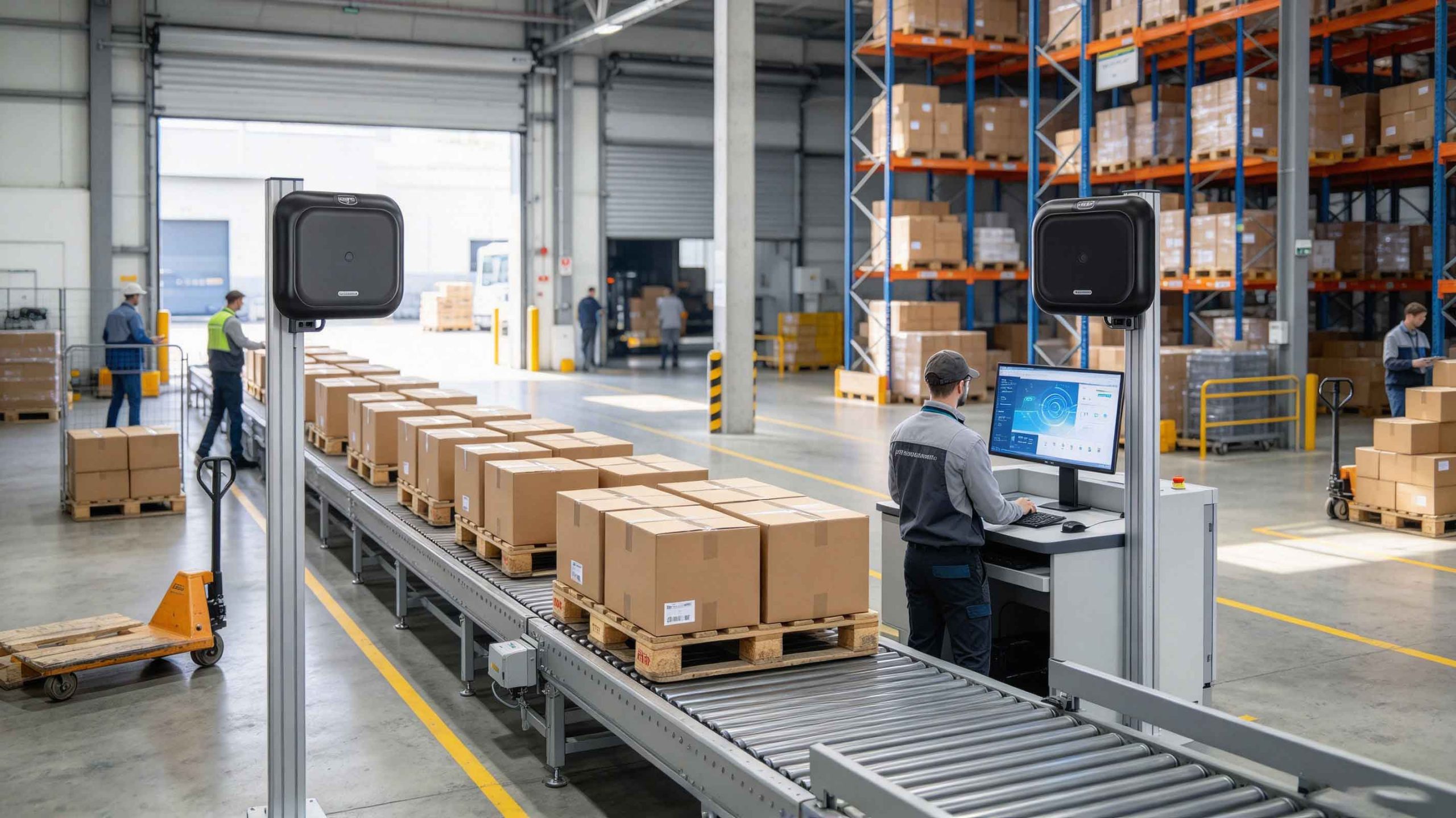 RFID at dispatch points helps logistics teams capture shipment identifiers and compare outgoing goods with shipping records.
Unlike a barcode workflow, which typically requires an operator or scanner to see each label, RFID can identify multiple compatible tags within a reader’s detection zone. This makes it particularly useful in busy distribution centers, receiving areas, manufacturing facilities, and retail warehouses where goods move continuously.
How Does RFID Work in Supply Chain Management?
An RFID supply chain system typically consists of three components: RFID tags, RFID readers, and software that processes the captured information.- RFID tags: Attached to individual products, containers, returnable assets, or pallets. Each tag carries an identifier and may store additional data, depending on its type.
- RFID readers and antennas: Capture tag responses as goods pass through receiving stations, warehouse doors, conveyor lines, or designated inventory zones.
- Supply chain software: Matches tag identifiers with product records and converts read events into operational information, such as receiving confirmation, stock movement, or shipment status.
The important detail is that a tag read is not automatically proof of a completed business transaction. Reader placement, duplicate-read filtering, shipment records, and software rules all influence whether the event accurately represents what happened.
Where Is RFID Used in the Supply Chain?
1. Warehouse inventory management
RFID helps warehouse teams identify tagged stock, conduct inventory checks, locate assets by recorded zone, and reconcile physical goods against system records. Fixed readers support automated checkpoints, while handheld readers allow staff to investigate exceptions or search specific storage areas.2. Shipping and receiving
Readers at dock doors can capture tagged cartons or pallets during inbound and outbound movements. Comparing the captured identifiers with an advance shipping notice helps teams detect missing, unexpected, or incorrectly routed items before a shipment leaves the facility.3. Manufacturing and asset tracking
Manufacturers can associate RFID identities with work-in-process items, tools, containers, and reusable transport equipment. Recorded movements help staff understand where items were last detected and whether equipment has reached the next production stage.What Benefits Does RFID Bring to Supply Chain Management?
The value of RFID becomes clearer when inventory records are compared with physical stock. A research project published by Auburn University in 2010 examined RFID-enabled inventory visibility in two retail field experiments. The first involved 13 stores over 23 weeks; the second expanded to 62 stores across five product categories. The researchers found that RFID’s effectiveness varied by product category, highlighting the importance of selecting appropriate applications rather than assuming identical results everywhere.Key operational benefits include:
- Improved inventory accuracy: More frequent tag reads help businesses identify discrepancies between recorded and actual inventory.
- Faster goods handling: Multiple tags can be captured within a reader’s detection zone, reducing dependence on individual barcode scans.
- Better shipment visibility: Receiving and dispatch events can be matched against expected shipment contents.
- Reduced manual checking: Automated checkpoints can handle routine identification, leaving staff to investigate exceptions.
- More effective asset utilization: Reusable containers, tools, and handling equipment can be identified at designated checkpoints.
How to Choose an RFID System for Supply Chain Operations
The appropriate RFID configuration depends on what is being tracked, where reads must occur, and how the information will be used.| Application | Suitable RFID approach | Important consideration |
|---|---|---|
| Warehouse stocktaking | Handheld or mobile RFID reader | Coverage, operator workflow, and missed-tag detection |
| Receiving and shipping | Fixed reader with antennas | Read-zone control and shipment reconciliation |
| Conveyor-based identification | Fixed UHF reader and appropriately positioned antennas | Tag orientation, speed, and spacing |
| Reusable container tracking | RFID tags with fixed or mobile readers | Tag durability and mounting location |
| System integration | RFID reader, middleware, and inventory software | Data filtering, event handling, and interface compatibility |
This distinction matters when a company works with several suppliers, distribution centers, or logistics providers. A reader can capture a tag identifier, but interoperable identification and event data help different organizations interpret the resulting information consistently.
For Cykeo, businesses evaluating fixed UHF RFID readers should assess the required read zone, tag compatibility, interface options, environmental conditions, and integration requirements before selecting hardware. A successful deployment is measured by reliable operational events—not simply by the maximum reading distance stated in a specification.
What Challenges Should Businesses Consider Before Implementing RFID?
RFID can improve supply chain visibility, but performance depends on the physical environment and the quality of system integration. Metal shelving, liquid-filled products, tag orientation, nearby readers, and overlapping read zones can affect UHF RFID performance.Before deployment, supply chain teams should evaluate these factors:
- Tag selection: Confirm that the tag operates at the reader’s frequency and is suitable for the product’s materials and packaging.
- Reader placement: Test antennas at actual receiving doors, conveyor points, or storage locations instead of relying solely on laboratory specifications.
- Read accuracy: Check for missed tags, duplicate reads, and tags captured from adjacent zones.
- Data integration: Ensure that tag identifiers map correctly to product records, purchase orders, shipment notices, and inventory transactions.
- Pilot testing: Validate the system with representative products, normal operating speeds, and realistic warehouse traffic before expanding deployment.