
How do RFIDs work?
RFIDs work by using radio frequency communication between RFID tags and readers. The reader sends signals to activate tags, receives stored identification data, and transfers information to software systems for tracking, inventory control, and automated management across different industries.How RFID Technology Works Step by Step
The communication process between RFID tags and readers
An RFID system usually contains three essential parts:| Component | Function |
|---|---|
| RFID Tag | Stores identification information and responds to signals |
| RFID Reader | Sends radio signals and collects tag data |
| Software System | Processes information and connects with business applications |
Step 1: Reader Sends a Signal
The RFID reader generates radio frequency energy through its antenna.This signal creates communication with nearby RFID tags.
Step 2: Tag Responds
When the RFID tag receives the signal, its chip sends stored information back to the reader.Depending on the RFID type, the tag may:
- Use energy from the reader signal
- Send a unique identification number
- Provide stored product information
Step 3: Reader Processes Information
The reader receives the response and converts it into digital data.The information can then be sent to:
- Inventory software
- Warehouse management systems
- Enterprise platforms
- Tracking applications
Step 4: Business System Uses Data
The collected RFID information allows companies to understand:- Where products are located
- When assets move
- Which items enter or leave an area
- How inventory changes over time
Active RFID and Passive RFID: Different Working Methods
Choosing the right RFID type for applications
RFID systems are commonly divided into passive RFID and active RFID.| RFID Type | How It Works | Common Applications |
|---|---|---|
| Passive RFID | Uses reader energy to respond | Inventory, logistics, retail |
| Active RFID | Uses internal battery power | Real-time asset tracking |
Active RFID provides longer communication range but requires battery management.
For most supply chain and inventory applications, passive UHF RFID is commonly selected because it balances:
- Reading distance
- Cost efficiency
- Identification speed
- Deployment scalability
How RFID Enables Automatic Tracking
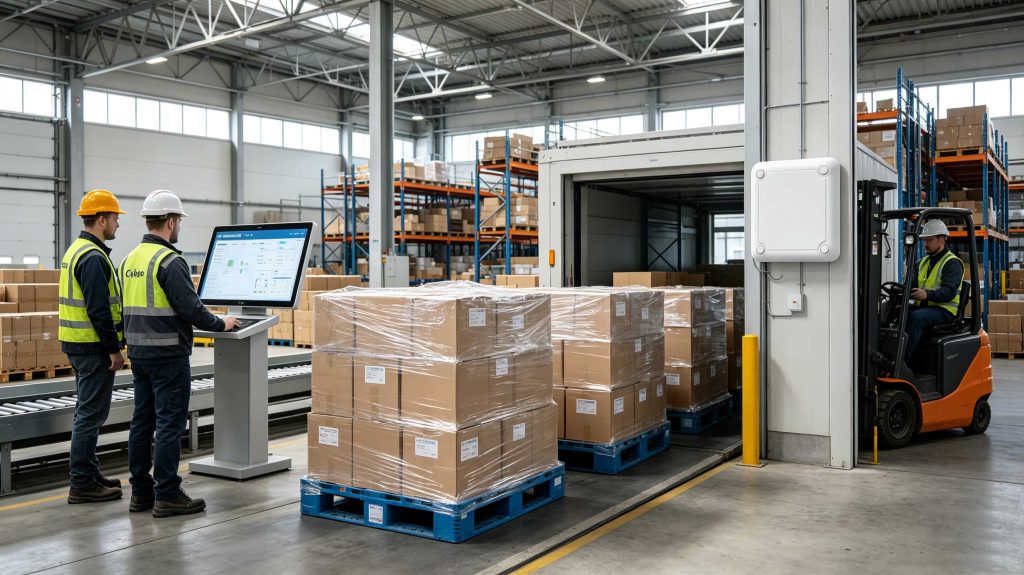
Warehouse Management
RFID helps monitor:- Incoming goods
- Storage locations
- Inventory levels
- Shipment preparation
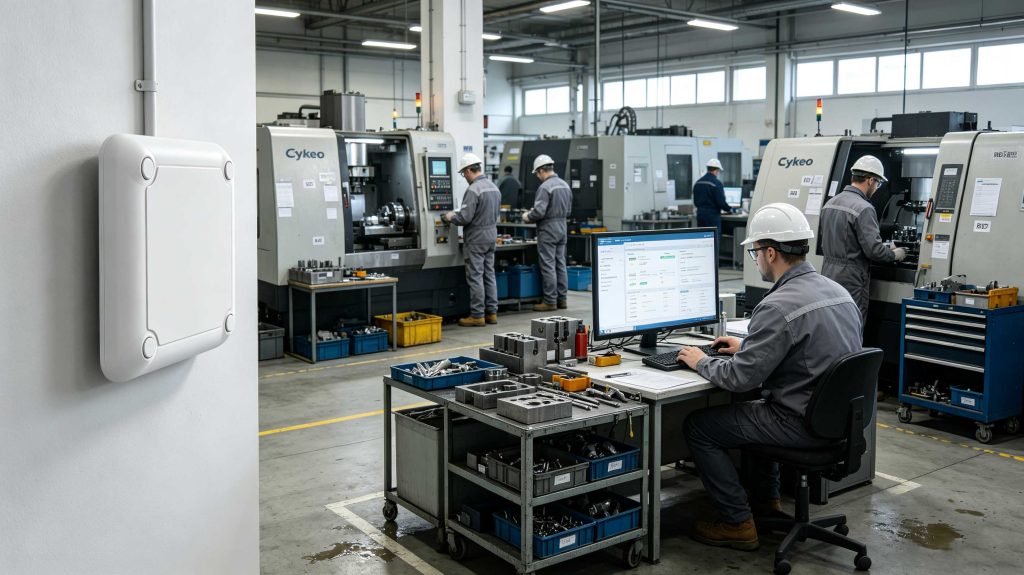
Manufacturing
RFID supports:- Material tracking
- Production process monitoring
- Tool management
Logistics
RFID provides:- Shipment verification
- Pallet tracking
- Returnable container management
| Factor | Impact |
|---|---|
| Tag selection | Determines communication reliability |
| Reader position | Controls coverage area |
| Output power | Affects reading performance |
| Software filtering | Reduces duplicate reads |
Not every application requires maximum reading distance.
Sometimes a controlled reading zone produces better operational results.
FAQ: How Do RFIDs Work?
FAQ 1: Do RFID tags need batteries to work?
Not all RFID tags need batteries.RFID tags are mainly divided into two categories:
| RFID Type | Battery Required | Working Principle |
|---|---|---|
| Passive RFID | No | Receives energy from RFID reader signals |
| Active RFID | Yes | Uses internal battery to transmit signals |
For example, a warehouse may attach passive UHF RFID tags to thousands of products and automatically identify them when they pass through RFID readers.
FAQ 2: How far can RFID readers detect tags?
The reading distance depends on several technical factors:- RFID frequency
- Reader output power
- Antenna design
- Tag performance
- Installation environment
| RFID Technology | Typical Reading Range |
|---|---|
| LF RFID | Few centimeters |
| HF RFID | Several centimeters |
| UHF RFID | Several meters |
However, longer distance does not always mean better performance.
In real projects, controlled reading zones often provide more accurate data than simply increasing signal strength.
FAQ 3: Can RFID read multiple tags at the same time?
Yes.One major advantage of RFID technology is multi-tag identification.
Unlike barcode systems that usually require individual scanning, RFID readers can communicate with multiple tags within their coverage area.
This capability is useful for:
- Warehouse inventory counting
- Retail stock management
- Logistics receiving
- Manufacturing material tracking
This reduces manual scanning work and improves operational efficiency.
FAQ 4: Does RFID require direct visibility like barcodes?
No.RFID does not require direct visual contact between the reader and tag.
This allows RFID systems to work in situations where:
- Products are inside boxes
- Items are stacked together
- Workers cannot easily access every item
- Large quantities need identification quickly
Metal and liquid environments may require specially designed RFID tags and installation methods.
Professional RFID deployment considers the actual operating environment before selecting hardware.
FAQ 5: Is RFID technology secure?
Yes, RFID can provide secure identification when properly designed.RFID security depends on the complete system architecture, including:
- Tag security features
- Reader authentication
- Communication protection
- Software permissions
- Database security
Instead, tags usually contain identification numbers, while detailed business information remains protected in backend systems.
This approach improves security and simplifies management.
FAQ 6: What industries use RFID technology?
RFID is used wherever organizations need automatic identification and tracking.Common applications include:
| Industry | RFID Application |
|---|---|
| Logistics | Shipment and pallet tracking |
| Manufacturing | Production process management |
| Retail | Inventory visibility |
| Healthcare | Medical equipment tracking |
| Aviation | Tool management |
| Government | Asset management |
FAQ 7: Why choose Cykeo RFID solutions?
Cykeo focuses on practical RFID applications rather than only RFID hardware.Based on real deployment experience, successful RFID projects require:
- Correct tag selection
- Reliable RFID readers
- Suitable antenna configuration
- Stable software integration
Key capabilities include:
- Support for EPC C1G2 / ISO 18000-6C protocols
- Adjustable reader performance
- Multi-tag recognition capability
- Flexible system integration