
What is an rfid chip used for? An RFID chip is used to store unique identification information, communicate with RFID readers, and connect physical objects with digital records. It enables EPC encoding, asset tracking, inventory management, and automated identification in hospitals, libraries, archives, banks, and industrial environments.
In simple applications, an RFID chip may only store a serial number. In professional deployments, however, the chip becomes the foundation of a complete identification system.
During RFID implementation projects, I have worked with asset tracking environments where thousands of items needed unique identities before entering operational systems. The challenge was never only “writing data into a chip”. The difficult part was ensuring that every RFID tag matched the correct physical object.
A medical device, archive file, electrical inspection tool, or library book needs a reliable digital identity:
RFID Chip EPC Code → Software Database → Physical Object
Once this relationship is established, organizations can search, manage, and monitor assets automatically.
This is why RFID chips are widely used in:
The communication process is completed through several steps:
Most UHF RFID chips are passive chips, meaning they do not require an internal battery. They receive energy from the reader field and respond automatically.
For UHF RFID applications, communication commonly follows ISO/IEC 18000-63 and EPC Class 1 Gen 2 standards.
According to GS1, EPC RFID technology provides unique digital identities for physical objects and improves visibility throughout supply chains.
The EPC acts as a unique identification number for each tagged item.
Before an RFID tag enters service, many organizations need to complete a registration process:
When the RFID reader detects the EPC number, the software immediately retrieves the related information.
This process prevents duplicate identification and creates accurate asset records.
Instead of operating as a simple RFID reader, it combines:
The workflow is:
RFID Tag → EPC Code → Object Information → Database Record
This allows organizations to create reliable digital identities before assets enter daily operations.
The Cykeo UHF RFID Tag Binding Station is designed for this registration stage. It provides a controlled environment where RFID chips inside tags can be written, verified, and connected with management information.
Unlike ordinary RFID readers that focus mainly on detection, a binding workstation focuses on data accuracy before deployment.
The complete workflow includes:
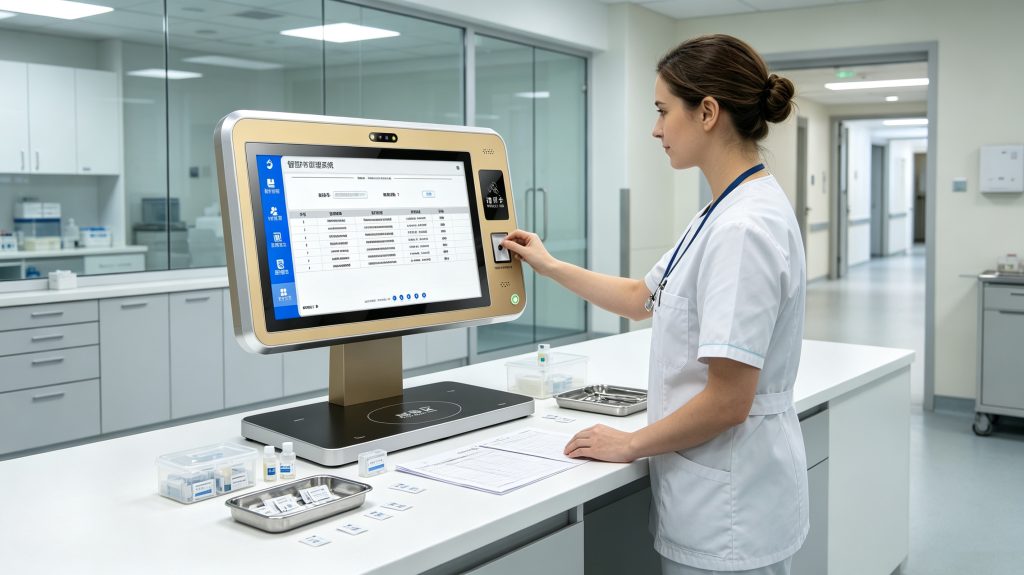 Cykeo RFID Tag Binding Station creates unique RFID chip identities for medical equipment tracking and digital asset management.
This compatibility allows organizations to use standard UHF RFID tags while maintaining reliable communication between:
In a normal working environment, multiple RFID tags may exist around the operator. If the reading area is not controlled properly, incorrect EPC assignment can happen.
Cykeo RFID Tag Binding Station uses a controlled operating area with approximately 50cm reading and writing range, helping prevent unintended tag operations.
This is especially valuable in:
This capability improves efficiency when organizations process large quantities of tags.
Typical workflows include:
Instead of registering items one by one, operators can complete higher-volume RFID initialization tasks.
Operators can:
A technician registering hundreds of RFID tags during a shift does not need multiple external screens or additional terminals.
For example, when registering an archive box, the operator can:
This combination is particularly useful for:
Understanding the Real Purpose of an RFID Chip
An RFID chip is the electronic intelligence inside an RFID tag. It stores identification data and allows an object to communicate with an RFID reader through radio frequency technology.In simple applications, an RFID chip may only store a serial number. In professional deployments, however, the chip becomes the foundation of a complete identification system.
During RFID implementation projects, I have worked with asset tracking environments where thousands of items needed unique identities before entering operational systems. The challenge was never only “writing data into a chip”. The difficult part was ensuring that every RFID tag matched the correct physical object.
A medical device, archive file, electrical inspection tool, or library book needs a reliable digital identity:
RFID Chip EPC Code → Software Database → Physical Object
Once this relationship is established, organizations can search, manage, and monitor assets automatically.
This is why RFID chips are widely used in:
- Asset management
- Inventory control
- Document tracking
- Medical equipment management
- Industrial tool monitoring
- Retail identification
How Does an RFID Chip Work?
UHF RFID chip working principle
An RFID chip works together with an antenna and RFID reader.The communication process is completed through several steps:
| Process | RFID Function |
|---|---|
| 1 | RFID reader sends radio frequency signals |
| 2 | RFID antenna receives energy from the signal |
| 3 | RFID chip activates and processes stored data |
| 4 | Chip sends identification information back |
| 5 | Software links the EPC number with an object record |
For UHF RFID applications, communication commonly follows ISO/IEC 18000-63 and EPC Class 1 Gen 2 standards.
According to GS1, EPC RFID technology provides unique digital identities for physical objects and improves visibility throughout supply chains.
RFID Chip and EPC Encoding: Creating a Unique Digital Identity
RFID EPC encoding system
One of the most important uses of an RFID chip is storing an EPC (Electronic Product Code).The EPC acts as a unique identification number for each tagged item.
Before an RFID tag enters service, many organizations need to complete a registration process:
- Assign unique EPC serial number
- Write EPC information into RFID chip
- Read and verify stored data
- Connect EPC with object information
- Save information into management software
| EPC Number | Object Information |
|---|---|
| E200341201000001 | Hospital monitoring equipment |
| E200341201000002 | Archive document box |
| E200341201000003 | Electrical maintenance tool |
This process prevents duplicate identification and creates accurate asset records.
Cykeo UHF RFID Tag Binding Station: Connecting RFID Chips With Business Data
Cykeo UHF RFID Tag Binding Station is designed specifically for RFID tag registration and management workflows.Instead of operating as a simple RFID reader, it combines:
- RFID writing function
- EPC identification
- Object information management
- Touchscreen interaction
- Data communication
- Visual information collection
The workflow is:
RFID Tag → EPC Code → Object Information → Database Record
This allows organizations to create reliable digital identities before assets enter daily operations.
Cykeo RFID Tag Binding Station: Designed for Accurate RFID Chip Registration
UHF RFID tag programming and EPC management
In professional RFID deployments, the first step is not tracking an asset. It is creating a reliable identity for that asset.The Cykeo UHF RFID Tag Binding Station is designed for this registration stage. It provides a controlled environment where RFID chips inside tags can be written, verified, and connected with management information.
Unlike ordinary RFID readers that focus mainly on detection, a binding workstation focuses on data accuracy before deployment.
The complete workflow includes:
- RFID tag placement in the controlled reading area
- EPC serial number writing
- RFID chip data verification
- Object information input
- Database association
- Final tag registration confirmation
Technical Advantages of Cykeo RFID Tag Binding Station
RFID tag binding workstation features
1. ISO18000-6C (EPC C1G2) Compatible RFID Communication
The Cykeo binding station follows the ISO18000-6C (EPC Class 1 Gen 2) protocol, which is widely used for UHF RFID identification systems.This compatibility allows organizations to use standard UHF RFID tags while maintaining reliable communication between:
- RFID chips
- RFID readers
- Database platforms
- Asset management software
2. Controlled 50cm RFID Reading and Writing Area
One challenge during RFID tag registration is accidental writing to nearby tags.In a normal working environment, multiple RFID tags may exist around the operator. If the reading area is not controlled properly, incorrect EPC assignment can happen.
Cykeo RFID Tag Binding Station uses a controlled operating area with approximately 50cm reading and writing range, helping prevent unintended tag operations.
This is especially valuable in:
- Hospitals preparing medical equipment tags
- Libraries processing books
- Archives registering document containers
- Banks managing confidential files
3. Multi-Tag Reading Capability
The system supports batch RFID identification and can recognize 50+ RFID tags simultaneously under suitable conditions.This capability improves efficiency when organizations process large quantities of tags.
Typical workflows include:
| Industry | Batch Registration Example |
|---|---|
| Library | Registering multiple RFID book tags |
| Archive | Preparing document storage labels |
| Hospital | Processing equipment identification tags |
| Power Industry | Managing inspection tools |
4. 21.5-Inch HD Touchscreen Interaction
The integrated 21.5-inch high-definition touchscreen creates an all-in-one workstation experience.Operators can:
- View RFID chip information
- Enter asset details
- Confirm EPC codes
- Manage registration records
- Operate software interfaces
A technician registering hundreds of RFID tags during a shift does not need multiple external screens or additional terminals.
5. Integrated Camera and QR Code Scanning Options
Cykeo RFID Tag Binding Station can be equipped with:- High-resolution document camera
- QR code scanner
For example, when registering an archive box, the operator can:
- Scan QR information
- Capture document images
- Write RFID EPC information
- Link everything into the database
This combination is particularly useful for:
- Archive digitization
- Medical record management
- Banking document control