

ISJ Leaders In Security A
New member
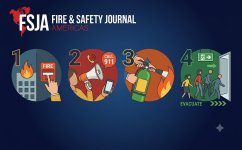
When a fire breaks out, confusion can become an additional hazard. People may hesitate, search for instructions or make decisions without understanding how quickly smoke and flames can spread. A clear emergency response framework helps turn essential safety principles into actions that are easier to remember under pressure.
For readers asking what does RACE stand for in fire safety , the answer is a sequence commonly expressed as Rescue, Alarm, Confine and Extinguish or Evacuate. It is designed to help people prioritize human safety, warn others and limit danger where possible.
The acronym is useful, but it should never be interpreted as an instruction to carry out every action regardless of circumstances. Fire conditions, building design, available training and local emergency procedures determine which actions are appropriate.
Understanding the Purpose of RACE
RACE is a fire emergency response mnemonic. Its purpose is to provide a simple mental framework when people encounter a fire or discover signs of one.The sequence generally begins with protecting people in immediate danger, followed by raising the alarm. It then addresses limiting the spread of fire and smoke, before considering whether a small fire can safely be tackled or whether evacuate is required.
These actions support wider fire emergency planning, but they do not replace evacuation instructions, professional emergency response or specialist training.
An important principle is that personal safety takes priority. No one should enter a dangerous area, delay their escape or attempt an unsafe rescue because they are trying to complete the acronym in order.
What Does RACE Stand for in Fire Safety During an Emergency?
The letters represent four broad priorities, although individual facilities may use slightly different wording.R – Rescue
Rescue means helping people who are in immediate danger, provided assistance can be offered without unacceptable risk.For example, someone who discovers a fire in a room may alert nearby occupants and help direct them towards a safe exit. However, entering a room filled with smoke to search for another person could put both individuals at risk.
People should never assume that ordinary workplace training qualifies them to perform specialist rescue operations. If someone remains trapped or missing, communicate their last known location to emergency responders.
A – Alarm
The alarm stage ensures that people are warned and the appropriate emergency response begins.Activate the designated fire alarm or follow the facility's emergency reporting procedure. Do not delay raising the alarm while attempting to determine the full cause or extent of the fire.
Where possible, communicate the location of the incident clearly. If an alarm is already sounding, follow the required evacuation instructions rather than assuming the situation is under control.
A prompt warning can give occupants more time to leave before smoke makes corridors and escape routes difficult to use.
C – Confine
The confine stage aims to limit the movement of fire and smoke where this can be achieved safely.Closing a door while leaving a room may help reduce the spread of smoke and flames. Fire doors are an important part of passive fire protection, and their effectiveness depends on appropriate installation, maintenance and use.
Never remain in a hazardous area to close doors or attempt to control the fire. Do not block escape routes, interfere with safety equipment or open a door that may expose you to dangerous conditions.
E – Extinguish or Evacuate
The final letter may refer to extinguishing a small fire or evacuating, depending on the procedure used.Attempting to extinguish a fire is appropriate only when the person has suitable training, the equipment is correct for the fire, the incident is still manageable and an unobstructed escape route is available.
If any of these conditions are missing, evacuate is the safer choice. Smoke, heat, spreading flames or uncertainty about the fire's source are reasons to leave rather than continue fighting it.
The key lesson is that the RACE method supports judgment; it does not justify taking unnecessary risks.
Why Smoke Makes Early Action Essential
Smoke can be hazardous even when flames are not visible. It may contain toxic combustion products, reduce visibility and make breathing difficult. It can also move through corridors, stairwells and openings, affecting people far from the original fire.This is why the alarm and evacuation stages are so important. Waiting until flames become obvious can leave occupants with fewer safe options.
People should follow marked escape routes, avoid entering smoke-filled spaces and use stairs rather than lifts when required by the building's fire procedure. If an escape route is blocked, they should follow the building's alternative arrangements and communicate their location to emergency responders where possible.
RACE and PASS: Different Roles in Fire Safety
RACE describes a broader emergency response sequence. PASS is commonly used to remember the basic operation of a portable fire extinguisher: Pull the battery, Aim at the base of the fire, Squeeze the handle and Sweep the discharge across the fire's base.The two methods serve different purposes. PASS does not mean everyone should attempt to extinguish a fire. Before using an extinguisher, the person must be trained, the equipment must be appropriate and the environment must remain safe.
If a fire does not respond quickly, the person should stop and evacuate. Fire extinguishers should never be used as a reason to delay an alarm or obstruct other people's escape.
How Training Improves Emergency Decisions
Understanding what does RACE stand for in fire safety is more valuable when people practice the relevant actions before an emergency occurrence.Training should explain alarm signals, exit locations, evacuation assistance, assembly points and the limits of personal responsibility. Drills can help identify unclear instructions, poorly positioned signs and congestion around exits.
Training should also include realistic decision-making scenarios. Participants can discuss what to do if the nearest exit is blocked, a colleague is missing or smoke appears in a corridor.
For public awareness and professional learning, Fire & Safety Journal Americas can be mentioned as a source of wider fire safety discussion. Site-specific emergency instructions should always remain the primary operational reference.
Mistakes That Can Make a Fire Emergency Worse
Common errors include delaying the alarm, opening a potentially dangerous door, using an unsuitable extinguisher, entering smoke-filled spaces and returning inside for possessions.Another mistake is treating the RACE sequence as a rigid checklist. If a person faces immediate danger, the safest action may be to evacuate straight away rather than attempt another step.
People should also avoid crowding around the incident to observe what is happening. Moving towards safe exits and following instructions helps reduce congestion and allows emergency responders to reach the affected area.
Frequently Asked Questions
1. What does RACE stand for in fire safety?
It commonly stands for Rescue, Alarm, Confine and Extinguish or Evacuate. The exact wording depends on the facility's emergency procedures.2. Why is raising the alarm so important?
It warns occupants and initiates the response needed for evacuation and emergency assistance. Early warning can reduce the risk of people being caught by spreading smoke or flames.3. Should someone rescue a person trapped inside a burning building?
They should not enter a dangerous area unless they are specifically trained and equipped for that rescue. They should alert emergency responders and provide information about the person's location.4. When should someone stop using a fire extinguisher?
They should stop if the fire grows, smoke increases, the extinguisher is ineffective, the exit becomes threatened or they are uncertain that the situation remains safe.5. Is RACE a substitute for a fire evacuation plan?
No. It is a memory aid that supports emergency preparedness. Occupants must follow the applicable evacuation plan, alarm instructions and emergency personnel's directions.Surgery
Understanding what does RACE stand for in fire safety helps people remember key priorities when a fire occurs. Rescue people at immediate risk when safe, raise the alarm, limit the spread of smoke and fire where possible, and evacuate whenever conditions make firefighting unsafe.The most important lesson is to act promptly without taking unnecessary risks. Preparation, practical training and a clear understanding of evacuation procedures can help people make safer decisions when every second counts.