
RFID UHF reader delivers long-range, high-speed multi-tag identification for logistics, manufacturing, and asset tracking systems. In real warehouse deployments, it reads hundreds of EPC Gen2 tags in motion without line-of-sight, supporting continuous automation workflows. Based on ISO/IEC 18000-6C (GS1 EPCglobal UHF Gen2 standard), it is widely adopted in global supply chains and industrial IoT environments (GS1.org, IS rg).
rg).
From field integration experience in warehouse gate systems, the stability of a UHF reader depends less on theoretical range and more on antenna tuning, tag density, and RF environment noise.
Unlike HF or NFC systems, UHF readers support:
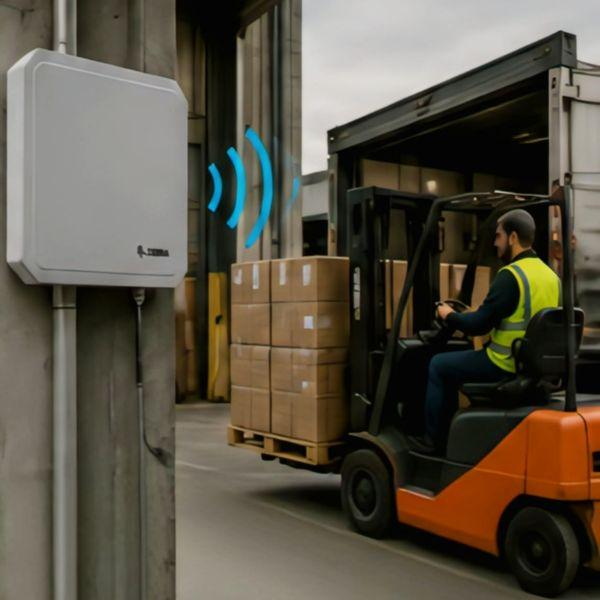 High-density tag capture at dock door using Cykeo UHF reader system
GS1 emphasizes interoperability across global supply chains, allowing a single RFID tag format to work across manufacturers, retailers, and logistics providers (GS1.org).
From integration experience, systems compliant with these standards significantly reduce middleware complexity during multi-vendor deployments.
Reader → Antenna Array → Middleware → WMS / ERP System
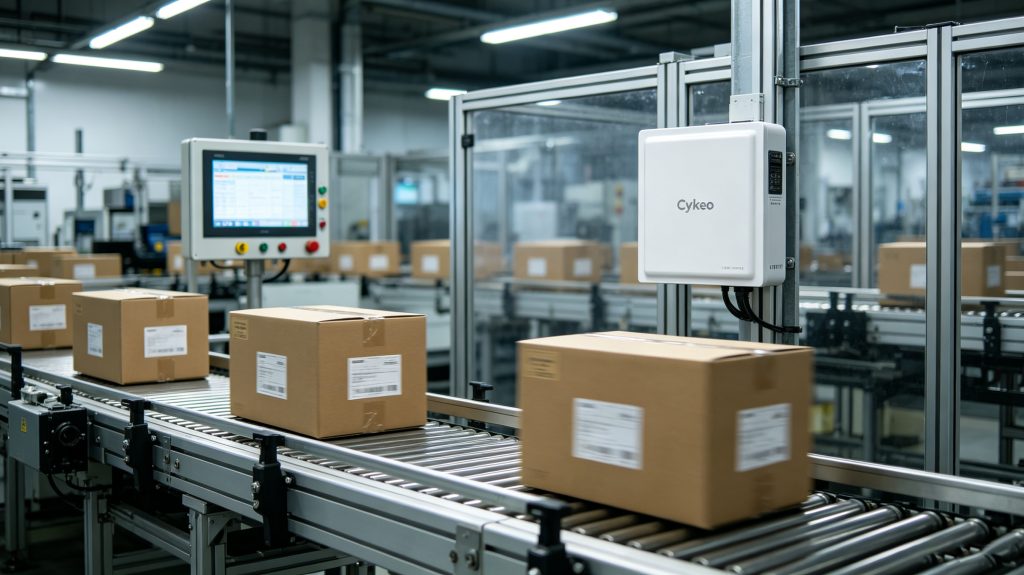 Real-time tracking of manufacturing workflow using RFID
A stable RFID UHF reader must maintain:
rg).From field integration experience in warehouse gate systems, the stability of a UHF reader depends less on theoretical range and more on antenna tuning, tag density, and RF environment noise.
What is RFID UHF Reader in Industrial Systems
A RFID UHF reader operates in the 860–960 MHz band and communicates with passive UHF tags using backscatter modulation. It is the backbone of modern logistics automation, enabling non-contact identification at scale.Unlike HF or NFC systems, UHF readers support:
- Long read distance (meters-level depending on antenna gain)
- Multi-tag anti-collision processing
- Conveyor and portal-style bulk scanning
- Real-time inventory visibility
Industrial Deployment Reality: Where Performance Is Decided
In real warehouse commissioning projects, performance gaps rarely come from the reader itself. They come from:- Metal reflection interference in pallet zones
- Tag orientation inconsistency on cartons
- RF noise from motors and Wi-Fi congestion
- Antenna placement angle (often underestimated)
Cykeo RFID UHF Reader in Field Integration
Cykeo systems are commonly deployed in industrial automation layers where reliability matters more than raw specs. Engineers typically integrate readers into:- Smart warehouse dock doors
- Tool tracking cabinets
- Production line WIP tracking systems
Technical Standards Behind RFID UHF Reader
The foundation of most modern UHF systems is:- ISO/IEC 18000-6C
- GS1 EPCglobal Gen2 protocol
GS1 emphasizes interoperability across global supply chains, allowing a single RFID tag format to work across manufacturers, retailers, and logistics providers (GS1.org).
From integration experience, systems compliant with these standards significantly reduce middleware complexity during multi-vendor deployments.
Real-World Performance Factors (Field Notes)
Instead of focusing only on lab numbers, industrial engineers evaluate:- Read stability under motion (0–3 m/s conveyor speed)
- Multi-tag density tolerance (50–300+ tags per scan zone)
- Miss-rate under metallic environments
- Reader cooling stability in 24/7 operation
Reader → Antenna Array → Middleware → WMS / ERP System
RFID UHF Reader in Smart Logistics Workflow
A typical workflow in deployment:- Pallet enters gate zone
- UHF reader triggers continuous scan
- EPC tags are captured in bulk
- Middleware filters duplicate reads
- Inventory system updates in real time
Engineering Insight: Why UHF Reader Stability Matters
From deployment experience, the most critical factor is not range—it is repeatability under noise.A stable RFID UHF reader must maintain:
- Consistent read rate under variable tag density
- Low false positive duplication
- Predictable antenna field shaping
Industrial Use Cases
Common applications include:- Warehouse inbound/outbound automation
- Retail inventory tracking
- Tool and asset management
- Smart manufacturing WIP tracking
- Vehicle and container identification