
One of the first questions buyers ask is simple:
“How much does an RFID tool cabinet cost?”
The honest answer is:
It depends.
Prices can vary significantly based on configuration, environment, and project requirements.
But once you understand the key factors, it becomes much easier to evaluate suppliers and avoid overpaying.
Because RFID tool cabinets are not standard products—they are system solutions.
Advanced systems can integrate with:
The cabinet itself is not the only cost.
You should also consider:
Here’s a simple way to decide:
Most companies recover cost through:
Low price often means unstable performance
Metal tools require proper RFID tags
Not every project needs AI or face recognition
System should support future expansion
It’s about building a system that fits your workflow, environment, and scale.
The best solution is not the cheapest—
it’s the one that actually works in your operation.
If you’re evaluating RFID tool cabinet pricing for your project,
it’s best to request a customized quote based on your requirements.
 You can provide:
“How much does an RFID tool cabinet cost?”
The honest answer is:
It depends.
Prices can vary significantly based on configuration, environment, and project requirements.
But once you understand the key factors, it becomes much easier to evaluate suppliers and avoid overpaying.
1. Typical RFID Tool Cabinet Price Range
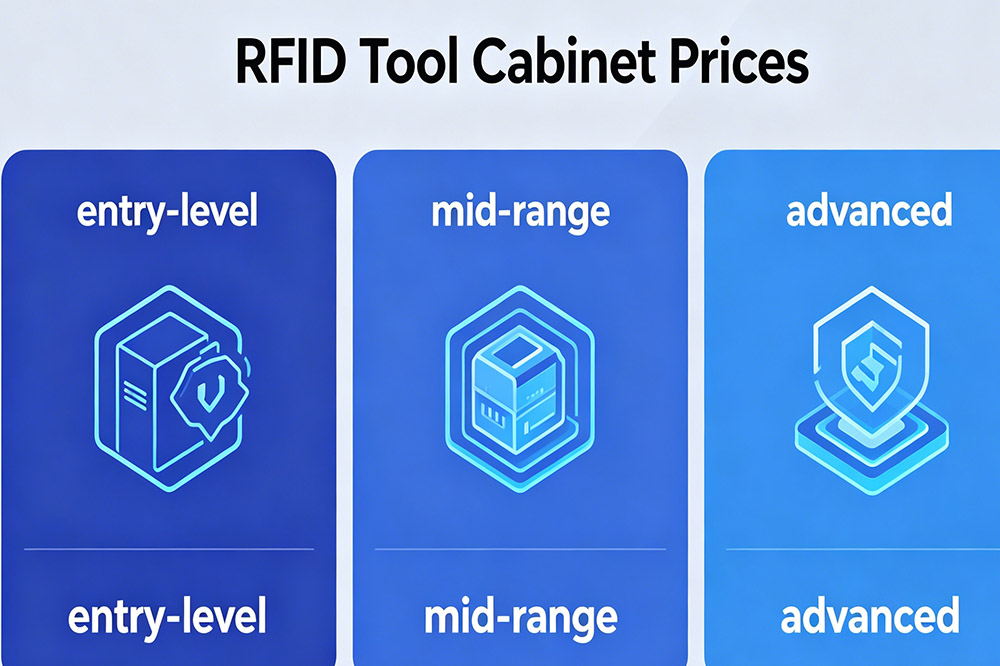
In most industrial projects, RFID tool cabinet pricing falls into this range:- Entry-level systems: $2,000 – $5,000
- Mid-range industrial cabinets: $5,000 – $12,000
- Advanced/customized solutions: $12,000+
Because RFID tool cabinets are not standard products—they are system solutions.
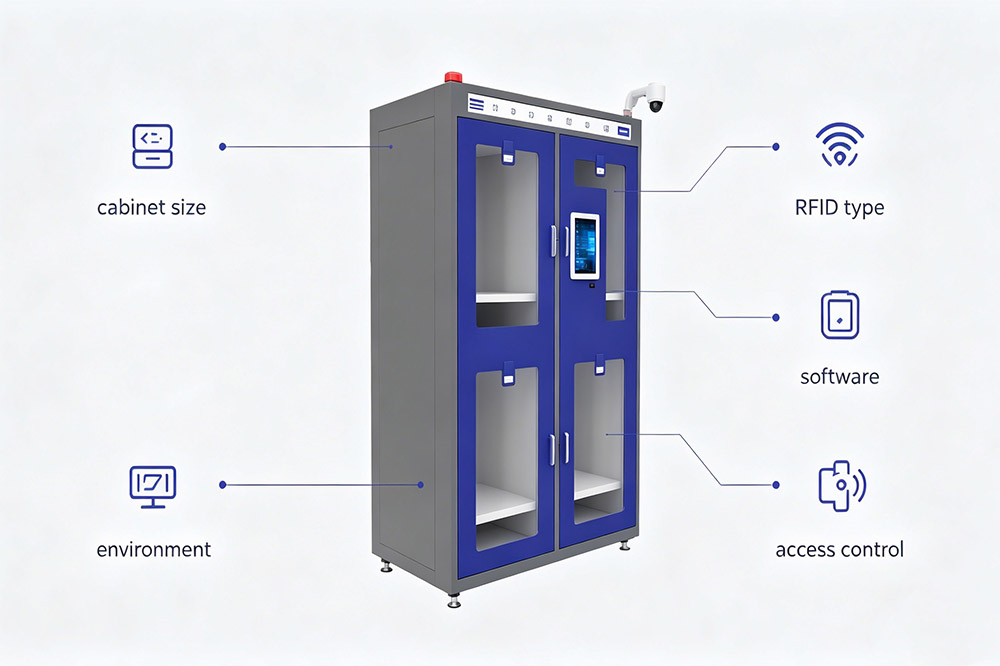
2. What Drives the Price?
1) Cabinet Size & Structure
Larger cabinets with more compartments cost more.- Single-door cabinet → lower cost
- Multi-layer smart cabinet → higher cost
2) RFID Technology Type
Not all RFID systems are the same.- LF / HF → cheaper, shorter range
- UHF → higher cost, better for bulk tool tracking
3) Number of Tools to Track
The more tools you manage, the more:- RFID tags
- Reader power
- System complexity
4) Software & Integration
Basic systems only show inventory.Advanced systems can integrate with:
- ERP
- MES
- Asset management platforms
5) Environment Requirements
Industrial environments often require:- Dust-proof design
- Waterproof structure
- High/low temperature resistance
6) Access Control Features
More advanced features = higher price:- RFID badge login
- Fingerprint access
- Face recognition
- Multi-user permission levels
3. Hidden Costs Buyers Often Miss
This is where many projects go wrong.The cabinet itself is not the only cost.
You should also consider:
✔ RFID Tags
Each tool needs a tag (especially for metal tools)✔ Installation & Deployment
On-site setup, calibration, and testing✔ Software Licensing
Some suppliers charge annual fees✔ Training
Operators need to learn the system✔ Maintenance
Long-term support and upgrades4. How to Choose the Right Price Level
Not every buyer needs the most advanced system.Here’s a simple way to decide:
Choose Entry-Level If:
- Small tool inventory
- Low usage frequency
- No integration needed
Choose Mid-Range If:
- Shared tools across teams
- Moderate tool value
- Need basic accountability
Choose Advanced System If:
- High-value tools
- Strict compliance requirements
- Large-scale operations
- Multi-site deployment
5. Example Configuration
A typical mid-range project might include:- 1 × RFID tool cabinet
- 100–300 RFID-tagged tools
- Basic management software
- User access control
6. Real ROI Perspective
Price is important—but ROI matters more.Most companies recover cost through:
- Reduced tool loss
- Fewer duplicate purchases
- Lower labor cost
- Faster operations
7. Common Pricing Mistakes to Avoid
 Choosing the cheapest supplier
Low price often means unstable performance Ignoring tag compatibility
Metal tools require proper RFID tags Overpaying for unnecessary features
Not every project needs AI or face recognition No scalability planning
System should support future expansion8. Final Thoughts
RFID tool cabinet pricing is not just about hardware.It’s about building a system that fits your workflow, environment, and scale.
The best solution is not the cheapest—
it’s the one that actually works in your operation.
If you’re evaluating RFID tool cabinet pricing for your project,
it’s best to request a customized quote based on your requirements.
You can provide:- Number of tools
- Tool types (metal / non-metal)
- Environment (factory / outdoor / oil & gas)
- Integration needs