
RFID antenna testing helps verify whether an antenna can deliver stable reading performance in actual RFID applications. Professional manufacturers test frequency range, signal strength, reading distance, polarization, and environmental adaptability to ensure consistent quality for bulk orders and OEM projects.
When people purchase RFID antennas, they usually look at the product specifications first.
Frequency range.
Gain.
Reading distance.
Connector type.
Size.
These details are important, but they do not always tell the full story.
An antenna can have impressive specifications and still perform differently after installation.
This happens because RFID antennas are not working in isolation.
Their performance depends on:
A single unstable antenna may not seem like a big issue.
But when a customer installs hundreds or thousands of units across warehouses or factories, small performance differences can become a serious problem.
This is why professional RFID antenna manufacturers usually perform multiple tests before shipment.
That means there is usually no employee checking every single read.
If an antenna misses tags during operation, the problem may not be discovered immediately.
For example:
A logistics company installs RFID antennas at warehouse gates.
Most pallets are identified correctly.
However, a small percentage of tags are missed every day.
Over time, inventory records become inaccurate.
The antenna may look normal, but the performance problem affects the entire operation.
Testing helps reduce these risks before products reach the customer.
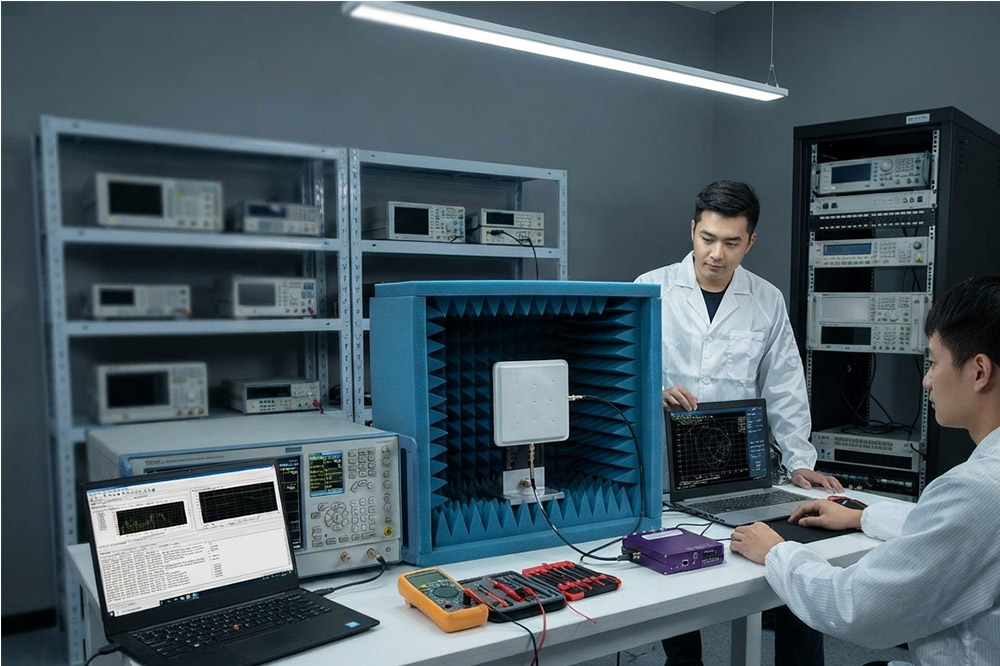
Common UHF RFID antenna frequency ranges include:
A professional test checks:
It shows how efficiently the antenna transfers RF energy.
A poor VSWR value may indicate:
A warehouse may have dozens of antennas working together.
Small differences between antennas can affect system adjustment.
But actual reading distance testing is more useful than a theoretical number.
A typical test may include:
The more important question is:
Can the antenna provide stable reading in the intended application?
For example:
A warehouse gate may require long-range reading.
A smart cabinet may require controlled short-range reading.
The test method should match the final use case.
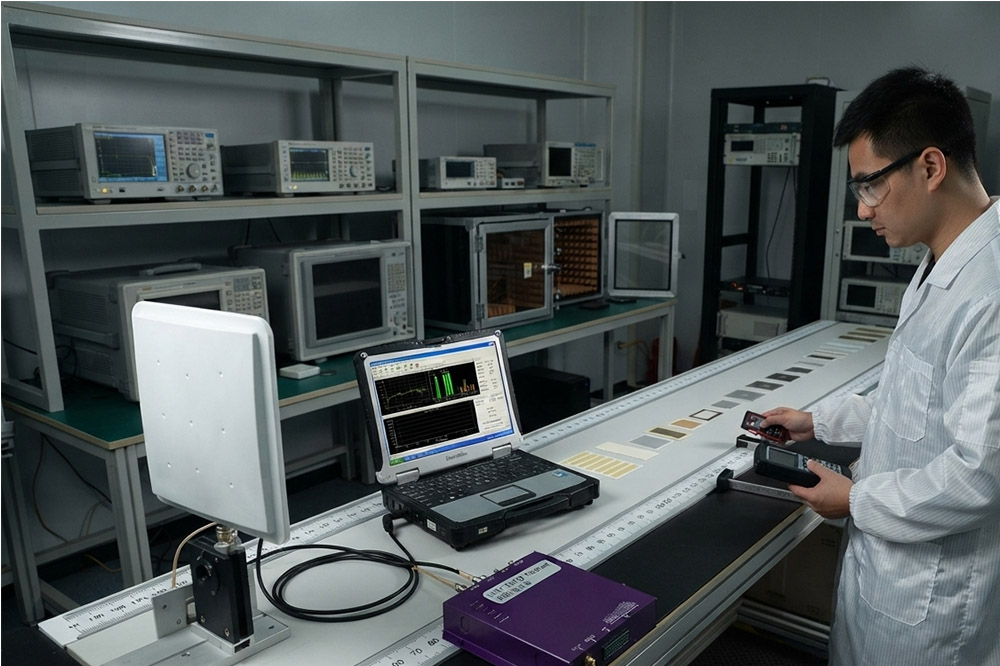
The radiation pattern shows how the RF energy spreads.
This helps engineers understand:
A directional antenna used for a loading gate should focus energy toward the passing area.
A wider coverage antenna may be better for open inventory zones.
Understanding the radiation pattern helps avoid installation problems later.
Sometimes the tag orientation changes during operation.
Testing polarization helps determine whether the antenna matches the application.
Common types include:
Examples:
Examples:
Factories and warehouses include:
For outdoor RFID projects, additional considerations may include:
Before ordering thousands of units, companies often test:
This is especially important for customized projects.
The complete system should be considered.
Testing with a different tag model may create misleading results.
Testing should include the actual conditions whenever possible.
A manufacturer should control:
They expect every antenna shipment to behave similarly.
Without quality control, troubleshooting becomes much more difficult.
Examples:
OEM customers should work with manufacturers that understand both production and application requirements.

When people purchase RFID antennas, they usually look at the product specifications first.
Frequency range.
Gain.
Reading distance.
Connector type.
Size.
These details are important, but they do not always tell the full story.
An antenna can have impressive specifications and still perform differently after installation.
This happens because RFID antennas are not working in isolation.
Their performance depends on:
- Reader compatibility
- RFID tag design
- Installation environment
- Signal interference
- Manufacturing consistency
A single unstable antenna may not seem like a big issue.
But when a customer installs hundreds or thousands of units across warehouses or factories, small performance differences can become a serious problem.
This is why professional RFID antenna manufacturers usually perform multiple tests before shipment.
Why RFID Antenna Testing Matters
RFID systems are expected to work automatically.That means there is usually no employee checking every single read.
If an antenna misses tags during operation, the problem may not be discovered immediately.
For example:
A logistics company installs RFID antennas at warehouse gates.
Most pallets are identified correctly.
However, a small percentage of tags are missed every day.
Over time, inventory records become inaccurate.
The antenna may look normal, but the performance problem affects the entire operation.
Testing helps reduce these risks before products reach the customer.
Main Tests Used for RFID Antenna Quality Control
1. Frequency and Performance Testing
The first step is checking whether the antenna operates within the expected frequency range.Common UHF RFID antenna frequency ranges include:
- 860 MHz to 960 MHz
A professional test checks:
- Operating frequency
- Signal stability
- Antenna performance consistency
2. VSWR Testing
VSWR, or Voltage Standing Wave Ratio, is one of the common antenna performance measurements.It shows how efficiently the antenna transfers RF energy.
A poor VSWR value may indicate:
- Signal loss
- Poor antenna matching
- Reduced reading performance
A warehouse may have dozens of antennas working together.
Small differences between antennas can affect system adjustment.
3. Reading Distance Testing
Many buyers ask about RFID antenna range.But actual reading distance testing is more useful than a theoretical number.
A typical test may include:
- RFID reader
- Selected RFID tags
- Different distances
- Different angles
The more important question is:
Can the antenna provide stable reading in the intended application?
For example:
A warehouse gate may require long-range reading.
A smart cabinet may require controlled short-range reading.
The test method should match the final use case.
4. Radiation Pattern Testing
RFID antennas do not send signals equally in every direction.The radiation pattern shows how the RF energy spreads.
This helps engineers understand:
- Signal coverage
- Direction strength
- Possible blind areas
A directional antenna used for a loading gate should focus energy toward the passing area.
A wider coverage antenna may be better for open inventory zones.
Understanding the radiation pattern helps avoid installation problems later.
5. Polarization Testing
RFID tags are not always positioned perfectly.Sometimes the tag orientation changes during operation.
Testing polarization helps determine whether the antenna matches the application.
Common types include:
Circular Polarized Antenna
Suitable when tag direction is unpredictable.Examples:
- Warehouse pallets
- Logistics tracking
Linear Polarized Antenna
Suitable when tag direction is controlled.Examples:
- Conveyor systems
- Fixed production lines
6. Environmental Testing
Real projects rarely happen in perfect laboratory conditions.Factories and warehouses include:
- Metal surfaces
- Temperature changes
- Dust
- Humidity
- Moving equipment
For outdoor RFID projects, additional considerations may include:
- Waterproof design
- UV resistance
- Mechanical protection
RFID Antenna Sample Testing Before Bulk Orders
For distributors and system integrators, sample testing is usually a smart step.Before ordering thousands of units, companies often test:
- Actual reading performance
- Installation method
- Compatibility with RFID readers
- Performance with their own tags
This is especially important for customized projects.
Common RFID Antenna Testing Mistakes
Testing Only the Antenna
An antenna may perform well alone but differently when connected to the final RFID system.The complete system should be considered.
Using the Wrong RFID Tags During Testing
Different tags have different performance levels.Testing with a different tag model may create misleading results.
Ignoring Installation Conditions
Antenna performance in an open room may not represent a factory environment.Testing should include the actual conditions whenever possible.
How RFID Antenna Manufacturers Improve Product Consistency
For bulk production, consistency is often more important than a single excellent sample.A manufacturer should control:
- Raw materials
- Antenna assembly process
- RF testing procedures
- Final inspection
They expect every antenna shipment to behave similarly.
Without quality control, troubleshooting becomes much more difficult.
RFID Antenna Testing for OEM and Custom Projects
Custom RFID antennas usually require additional testing.Examples:
Custom Size Antennas
The antenna structure changes, so performance needs verification.Special Housing Design
The housing material may affect RF performance.New Installation Method
Antenna behavior may change after integration into equipment.OEM customers should work with manufacturers that understand both production and application requirements.
What Should Buyers Ask RFID Antenna Suppliers?
Before placing a bulk order, consider asking:- What tests are performed before shipment?
- Can you provide test reports?
- Can samples be evaluated?
- Do you support OEM customization?
- How do you ensure batch consistency?