
yannick011990
Member
A maintenance supervisor once told me the machines that break down are almost never the new ones. It's the ones everybody trusts too much, the ones nobody checks because they've "always just worked." Then one belt slips at the wrong moment and the whole line stalls.
That's the thing about equipment built to move steel pipe around a facility all day. It takes a beating, quietly, and it only tells you something's wrong once it's already a problem. Staying ahead of that takes a bit of routine, not much more.
It's a short term win that costs more later. A ten minute check now beats an afternoon of downtime, every single time, and most crews already know that even if the schedule doesn't always reflect it.
Sensors need attention as well, if the setup uses them. A position sensor that's drifted out of calibration might still "work," just not accurately, which is honestly worse than it failing outright because nobody catches the error until pipe ends up somewhere it shouldn't.
Cleaning matters more than people give it credit for. Dust and metal shavings build up on rollers and belts, and that build up changes how pipe grips and moves. A steel pipe delivery machine running dirty rollers behaves differently than one that's kept clean, even if nothing looks obviously broken.
Emergency stop buttons need testing too, not just installing once and forgetting about them. Interlocks that haven't been checked in months can fail quietly, and nobody finds out until the one time it actually mattered. Operators trained on these systems catch far more than a checklist ever will, because they notice the small sounds and small vibrations that don't show up on a maintenance log.
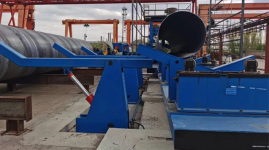
This matters even more once a facility starts running more pipe handling equipment across different lines at once, since each piece has its own quirks and failure points that a general checklist might miss entirely.
FAQs
How often should lubrication happen?
Follow the manufacturer's recommended schedule rather than waiting for a squeak, since friction damage builds up quietly before it becomes obvious.
What's the first sign a clamp or roller is wearing out?
Slack in the grip or an uneven surface on the roller is usually the earliest warning sign, often noticed by an operator before it shows on paper.
Do sensors really need regular calibration?
Yes. A sensor that's drifted out of calibration can keep working while giving inaccurate readings, which is harder to catch than a total failure.
Can operator training really prevent breakdowns?
A trained operator who knows normal sounds and movement patterns often catches small problems long before they turn into a shutdown.
Should electrical checks be part of routine maintenance?
Yes, loose wiring and worn connections cause a lot of unplanned stops that a quick electrical check would have caught early.
That's the thing about equipment built to move steel pipe around a facility all day. It takes a beating, quietly, and it only tells you something's wrong once it's already a problem. Staying ahead of that takes a bit of routine, not much more.
Why Upkeep Gets Ignored
Busy schedules eat maintenance time first. When orders are stacking up, nobody wants to pull a roller table offline for an inspection that might turn up nothing. So it waits. And waits. Until a belt tears mid shift and the whole yard backs up for a day.It's a short term win that costs more later. A ten minute check now beats an afternoon of downtime, every single time, and most crews already know that even if the schedule doesn't always reflect it.
What Regular Inspection Actually Covers
Look at rollers for flat spots or uneven wear. Check clamps and grippers for slack, since a clamp that used to hold tight can loosen after thousands of cycles without anyone noticing. Check the belt tension too. A belt riding loose will sag under a heavy length of pipe, and that sag is how pipe starts drifting off its intended path.Sensors need attention as well, if the setup uses them. A position sensor that's drifted out of calibration might still "work," just not accurately, which is honestly worse than it failing outright because nobody catches the error until pipe ends up somewhere it shouldn't.
Lubrication, Cleaning, And The Boring Stuff
Moving parts need lubrication on a schedule, following whatever the manufacturer actually recommends rather than guessing. Skip it long enough and friction does the damage slowly, the kind that doesn't show up until a bearing seizes on a Monday morning.Cleaning matters more than people give it credit for. Dust and metal shavings build up on rollers and belts, and that build up changes how pipe grips and moves. A steel pipe delivery machine running dirty rollers behaves differently than one that's kept clean, even if nothing looks obviously broken.
A Quick Word On Electrical Checks
Loose connections and worn cables cause more unplanned stops than people expect. Control panels, wiring, and electrical components deserve a look on a regular basis, not just when something trips a breaker unexpectedly.Safety Isn't A Separate Topic
Here's the part that gets missed. Maintenance and safety aren't really two different jobs, they're the same job looked at from different angles. A worn clamp isn't just a performance problem, it's a safety problem waiting for the wrong moment to show up.Emergency stop buttons need testing too, not just installing once and forgetting about them. Interlocks that haven't been checked in months can fail quietly, and nobody finds out until the one time it actually mattered. Operators trained on these systems catch far more than a checklist ever will, because they notice the small sounds and small vibrations that don't show up on a maintenance log.
Training Operators Properly
A machine is only as good as the person running it, and that's not a throwaway line. Operators who understand what normal sounds and movements look like will stop a line before a small issue turns into a repair bill. Good training also covers when to call it in for professional servicing rather than trying a fix nobody's qualified for.This matters even more once a facility starts running more pipe handling equipment across different lines at once, since each piece has its own quirks and failure points that a general checklist might miss entirely.
Final Thought
None of this is complicated, which is honestly the point. Regular checks, scheduled lubrication, clean components, and operators who know the machine well enough to notice when something's off. Do that consistently and breakdowns become rare instead of routine.FAQs
How often should lubrication happen?
Follow the manufacturer's recommended schedule rather than waiting for a squeak, since friction damage builds up quietly before it becomes obvious.
What's the first sign a clamp or roller is wearing out?
Slack in the grip or an uneven surface on the roller is usually the earliest warning sign, often noticed by an operator before it shows on paper.
Do sensors really need regular calibration?
Yes. A sensor that's drifted out of calibration can keep working while giving inaccurate readings, which is harder to catch than a total failure.
Can operator training really prevent breakdowns?
A trained operator who knows normal sounds and movement patterns often catches small problems long before they turn into a shutdown.
Should electrical checks be part of routine maintenance?
Yes, loose wiring and worn connections cause a lot of unplanned stops that a quick electrical check would have caught early.