
A long range RFID scanner can identify tags across a warehouse gate, but simply increasing reading power is not the best way to improve performance. A reliable RFID gate needs the right antenna direction, reader settings, tag placement, physical layout, and software filtering to create a controlled reading zone.
There is a moment in almost every RFID gate project when someone asks:
“Why is the reader picking up the pallet next to the gate?”
The reader may be working perfectly.
That is what makes the problem confusing.
A long range RFID scanner is designed to detect tags from a distance. If the reading area is not controlled properly, the reader can do exactly what it was designed to do — detect tags that happen to be within its RF field.
The problem is not always weak performance.
Sometimes there is simply too much reading range in the wrong direction.
This becomes especially noticeable in warehouses where several pallets are waiting close to the entrance.
RFID reader + antenna = RFID gate
In practice, it is more like:
Reader + antenna + tag + physical layout + power settings + software + operating process
Every part affects the final result.
Imagine a loading area with two lanes.
Lane A is for outbound shipments.
Lane B is only three meters away and is waiting for another truck.
The customer wants the RFID system to record products passing through Lane A.
If the reader detects tags in both lanes, the hardware may still be performing normally.
The system design needs more control.
This is why RFID gate projects often require testing rather than simply installing the highest-power reader available.
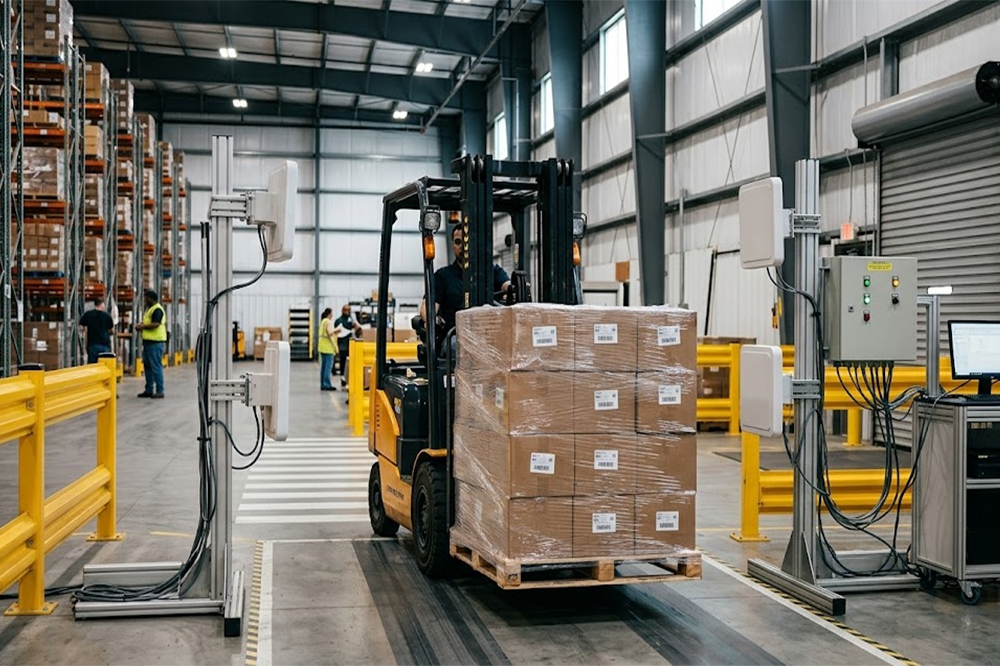
For example:
Compare this with:
A 20-meter reader may sound attractive, but a warehouse gate may only need a controlled 4-meter zone.
Longer is not automatically better.
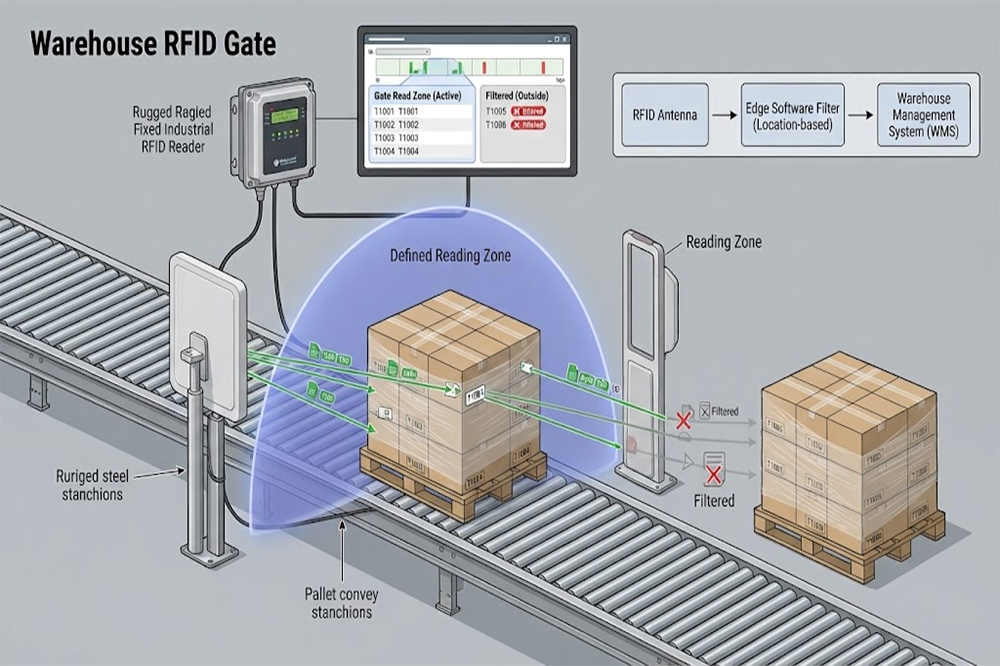
For a warehouse gate, directional antennas are often useful because the system needs to focus on a specific passage.
Think about a flashlight.
If you point it at the doorway, most of the useful light goes where you need it.
If you shine it everywhere, you illuminate areas that may not matter.
RFID is obviously more complicated than a flashlight, but the basic idea is useful when explaining antenna selection to a customer.
The antenna should help define the reading area.
Two antennas may be enough for a relatively simple gate.
A wider lane, different pallet positions, or a more demanding application may require additional antennas.
The important thing is to understand what the tags look like while passing through the gate.
A pallet does not always travel perfectly straight.
One carton may face the left antenna.
Another may face the right.
Some tags may be partially blocked.
The antenna layout needs to account for this.
But with an RFID gate, more power can sometimes create more problems.
Suppose the required reading zone ends at the gate.
The reader is configured at high power.
Now tags on pallets waiting 6–8 meters away are detected.
The software receives those EPC numbers.
The customer sees an inventory event that should never have happened.
Reducing power may actually improve the system.
It sounds counterintuitive, but this is one of those RFID problems that becomes easier once you stop treating maximum range as the main target.
A “misread” can mean different things.
Sometimes the reader detects a tag that is physically outside the intended gate.
Sometimes the same tag is reported several times.
Sometimes a pallet is detected before it has actually crossed the checkpoint.
Sometimes tags from an adjacent lane appear in the system.
And sometimes the tag itself is correct, but the software assigns the event to the wrong process.
So before changing hardware, the integrator should find out exactly what the customer means by “misread.”
For example, a pallet stays in front of the antenna for ten seconds.
The reader may detect the same EPC repeatedly.
That does not necessarily mean the reader is malfunctioning.
The software can normally apply filtering logic.
For example:
EPC detected → store EPC → ignore repeated reads for a defined period → create one movement event
The exact filtering strategy depends on the application.
For warehouse gates, this kind of event management can be just as important as RF performance.
That can create problems.
One carton may have a tag facing the antenna.
Another may have the tag on the opposite side.
A third may have the tag hidden behind another carton.
If the customer is tracking pallets, the tag might be placed near the pallet edge.
If the customer is tracking cartons, the position may vary from box to box.
Before changing the reader, standardizing tag placement can sometimes improve consistency.
It is a relatively inexpensive adjustment.
There are usually steel racks nearby.
Sometimes the gate is only a few meters from a large metal structure.
That can affect the RF environment.
If the RFID system works well in an open test area but performs poorly after installation, look at the physical environment.
Where are the rfid antennas?
What are they facing?
How close are they to metal?
Where are the tags?
Are the products themselves metal?
These questions are often more useful than immediately changing reader models.
Sometimes it stops.
Sometimes it turns slightly.
Sometimes the pallet is raised higher.
Sometimes the driver approaches the gate from an angle.
That movement changes tag orientation.
For a real warehouse project, testing should involve actual forklift movement rather than having an employee stand in front of an antenna holding one RFID tag.
The second test is much closer to reality.
A pallet may carry dozens of tagged cartons.
Several pallets may pass through a gate within a short period.
The reader needs to handle multiple tags efficiently.
The system also needs to understand which tags belong to which movement event.
This is where reader performance and software logic meet.
The reader provides the tag data.
The application decides what that data means.
For example:
Gate 1 | Gate 2 | Gate 3 | Gate 4
If every reader has a wide reading field, the systems can interfere with each other’s intended reading zones.
This can become more noticeable when several readers operate at the same time.
A solution may involve:
This is one reason multi-gate projects should be tested as a complete system.
The integrator should not simply stand 20 meters away with a tag and declare the test complete.
Instead, test:
3 meters
5 meters
8 meters
10 meters
and so on.
Then change:
Tag orientation
Product
Pallet position
Forklift direction
Antenna angle
The useful result is not the maximum distance.
It is the distance at which the system performs reliably under normal operating conditions.
There is a moment in almost every RFID gate project when someone asks:
“Why is the reader picking up the pallet next to the gate?”
The reader may be working perfectly.
That is what makes the problem confusing.
A long range RFID scanner is designed to detect tags from a distance. If the reading area is not controlled properly, the reader can do exactly what it was designed to do — detect tags that happen to be within its RF field.
The problem is not always weak performance.
Sometimes there is simply too much reading range in the wrong direction.
This becomes especially noticeable in warehouses where several pallets are waiting close to the entrance.
A Warehouse Gate Is Not Just a Reader
It is easy to think of an RFID gate as:RFID reader + antenna = RFID gate
In practice, it is more like:
Reader + antenna + tag + physical layout + power settings + software + operating process
Every part affects the final result.
Imagine a loading area with two lanes.
Lane A is for outbound shipments.
Lane B is only three meters away and is waiting for another truck.
The customer wants the RFID system to record products passing through Lane A.
If the reader detects tags in both lanes, the hardware may still be performing normally.
The system design needs more control.
This is why RFID gate projects often require testing rather than simply installing the highest-power reader available.
The First Question: Where Should the RFID Reading Zone Be?
Before choosing the reader, define the actual reading area.For example:
- Gate width: 4 meters
- Required reading distance: 3–5 meters
- Pallet speed: slow forklift movement
- Tags: UHF passive RFID
- Antennas: two directional antennas
Compare this with:
That doesn’t tell the supplier very much.“We need a long range RFID scanner.”
A 20-meter reader may sound attractive, but a warehouse gate may only need a controlled 4-meter zone.
Longer is not automatically better.
Antenna Direction Is a Big Part of the Solution
The antenna determines where the RF energy is concentrated.For a warehouse gate, directional antennas are often useful because the system needs to focus on a specific passage.
Think about a flashlight.
If you point it at the doorway, most of the useful light goes where you need it.
If you shine it everywhere, you illuminate areas that may not matter.
RFID is obviously more complicated than a flashlight, but the basic idea is useful when explaining antenna selection to a customer.
The antenna should help define the reading area.
Two Antennas or Four?
There is no universal answer.Two antennas may be enough for a relatively simple gate.
A wider lane, different pallet positions, or a more demanding application may require additional antennas.
The important thing is to understand what the tags look like while passing through the gate.
A pallet does not always travel perfectly straight.
One carton may face the left antenna.
Another may face the right.
Some tags may be partially blocked.
The antenna layout needs to account for this.
Reader Power Needs Some Restraint
When a customer reports short reading distance, increasing power is an obvious reaction.But with an RFID gate, more power can sometimes create more problems.
Suppose the required reading zone ends at the gate.
The reader is configured at high power.
Now tags on pallets waiting 6–8 meters away are detected.
The software receives those EPC numbers.
The customer sees an inventory event that should never have happened.
Reducing power may actually improve the system.
It sounds counterintuitive, but this is one of those RFID problems that becomes easier once you stop treating maximum range as the main target.
What Counts as a Misread?
It helps to define the term.A “misread” can mean different things.
Sometimes the reader detects a tag that is physically outside the intended gate.
Sometimes the same tag is reported several times.
Sometimes a pallet is detected before it has actually crossed the checkpoint.
Sometimes tags from an adjacent lane appear in the system.
And sometimes the tag itself is correct, but the software assigns the event to the wrong process.
So before changing hardware, the integrator should find out exactly what the customer means by “misread.”
Duplicate Reads Are Not Always a Hardware Problem
UHF RFID readers can see the same tag multiple times while it remains in the reading zone.For example, a pallet stays in front of the antenna for ten seconds.
The reader may detect the same EPC repeatedly.
That does not necessarily mean the reader is malfunctioning.
The software can normally apply filtering logic.
For example:
EPC detected → store EPC → ignore repeated reads for a defined period → create one movement event
The exact filtering strategy depends on the application.
For warehouse gates, this kind of event management can be just as important as RF performance.
Tag Placement Can Change Gate Performance
A customer may put RFID labels anywhere that is convenient.That can create problems.
One carton may have a tag facing the antenna.
Another may have the tag on the opposite side.
A third may have the tag hidden behind another carton.
If the customer is tracking pallets, the tag might be placed near the pallet edge.
If the customer is tracking cartons, the position may vary from box to box.
Before changing the reader, standardizing tag placement can sometimes improve consistency.
It is a relatively inexpensive adjustment.
Metal Racks Can Make Things More Interesting
Warehouse gates are rarely installed in empty rooms.There are usually steel racks nearby.
Sometimes the gate is only a few meters from a large metal structure.
That can affect the RF environment.
If the RFID system works well in an open test area but performs poorly after installation, look at the physical environment.
Where are the rfid antennas?
What are they facing?
How close are they to metal?
Where are the tags?
Are the products themselves metal?
These questions are often more useful than immediately changing reader models.
Forklifts Create Another Variable
A forklift carrying a pallet does not always move at the same speed.Sometimes it stops.
Sometimes it turns slightly.
Sometimes the pallet is raised higher.
Sometimes the driver approaches the gate from an angle.
That movement changes tag orientation.
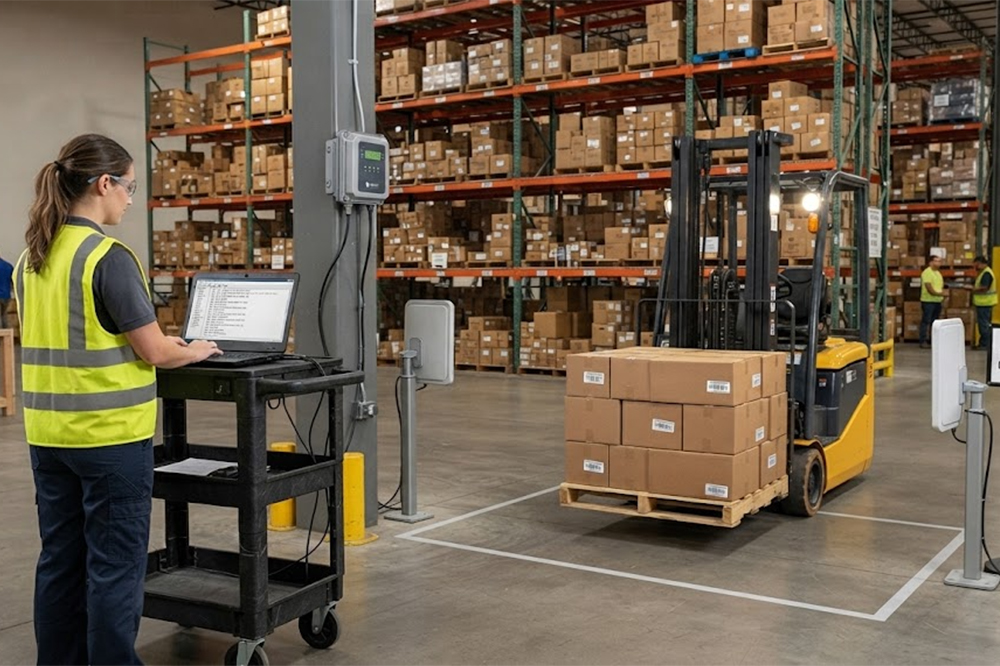
For a real warehouse project, testing should involve actual forklift movement rather than having an employee stand in front of an antenna holding one RFID tag.
The second test is much closer to reality.
What Happens When Multiple Tags Enter Together?
This is where UHF RFID becomes useful, but it also needs proper configuration.A pallet may carry dozens of tagged cartons.
Several pallets may pass through a gate within a short period.
The reader needs to handle multiple tags efficiently.
The system also needs to understand which tags belong to which movement event.
This is where reader performance and software logic meet.
The reader provides the tag data.
The application decides what that data means.
Don’t Ignore Adjacent Gates
A common warehouse layout has several gates side by side.For example:
Gate 1 | Gate 2 | Gate 3 | Gate 4
If every reader has a wide reading field, the systems can interfere with each other’s intended reading zones.
This can become more noticeable when several readers operate at the same time.
A solution may involve:
- Antenna positioning
- Power adjustment
- Reader configuration
- Frequency management
- Software filtering
- Physical separation
This is one reason multi-gate projects should be tested as a complete system.
Reading Distance Should Be Measured in the Real Application
Suppose a reader is advertised as reaching 20 meters.The integrator should not simply stand 20 meters away with a tag and declare the test complete.
Instead, test:
3 meters
5 meters
8 meters
10 meters
and so on.
Then change:
Tag orientation
Product
Pallet position
Forklift direction
Antenna angle
The useful result is not the maximum distance.
It is the distance at which the system performs reliably under normal operating conditions.