
How Does RFID Tracking Work in a Power Plant?
A typical power plant RFID workflow looks like this:RFID tag → antenna → long range RFID scanner → EPC identification → software record → maintenance or inventory event
For example, a tagged maintenance tool leaves the central warehouse. A reader at the warehouse exit detects the tag and sends its EPC to the asset management system. The software can then update the tool status from “stored” to “issued” or “in transit.”
When the tool arrives at a workshop or substation, another reader can record the next checkpoint.
The reader identifies the tag. The software decides what the detection means.
That distinction matters because the same RFID event may represent different actions depending on the location, direction, time, work order, and asset status.
Tracking Power Plant Equipment
Power plants contain many valuable assets that move between storage, maintenance, operation, and inspection areas.Potential RFID-tracked assets include:
- Maintenance tools
- Testing instruments
- Portable generators
- Pumps and motors
- Electrical cabinets
- Switchgear components
- Transformers and spare parts
- Cable drums and reels
- Toolboxes and equipment cases
- Safety equipment
- Inspection devices
- Reusable transport containers
- Maintenance carts
- Spare parts bins
For fixed assets, RFID can support periodic inspection and inventory confirmation. For mobile assets, it can provide a record of movement between defined checkpoints.
A long range RFID scanner is particularly useful when workers need to identify several tagged items without scanning each barcode individually.
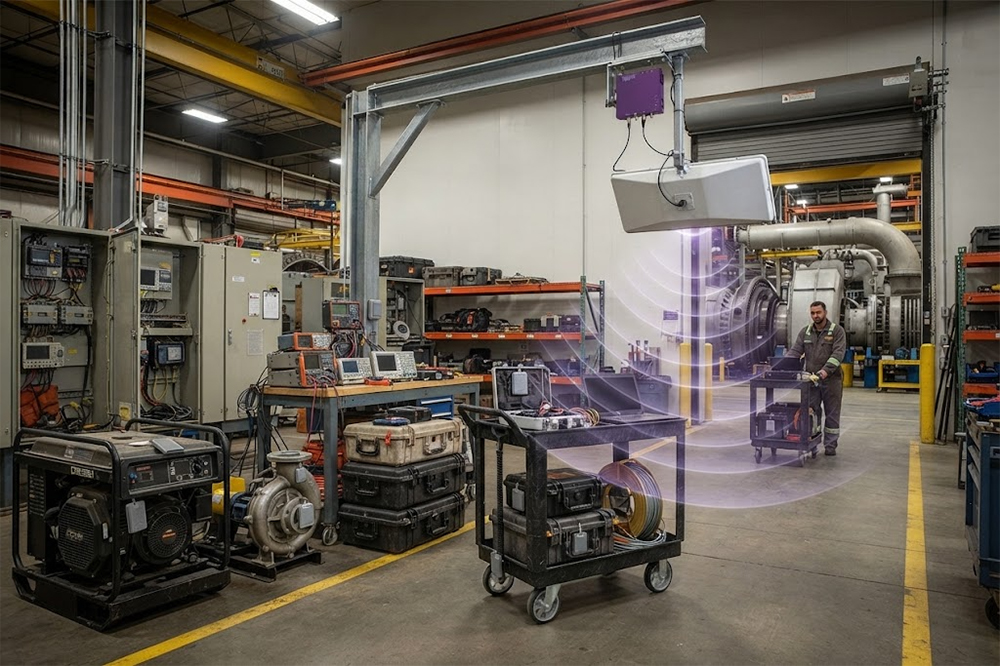
RFID for Maintenance Tools and Equipment
Maintenance teams often lose time searching for tools, testing instruments, and portable equipment.A tool may be:
- In the central warehouse
- Assigned to a maintenance team
- Inside a workshop
- At a substation
- In a service vehicle
- Waiting for inspection
- Returned but not yet recorded
A fixed reader at a workshop entrance may detect tools entering or leaving the area. A handheld RFID reader can then support shelf-level checks or locate a missing item nearby.
For many power plants, a combination of fixed and handheld readers is more practical than using only one type of equipment.
Metal Equipment Requires Careful Tag Selection
Power plant environments contain large amounts of metal. Transformers, electrical cabinets, generators, motors, cable reels, toolboxes, and industrial containers can affect RFID performance.A standard RFID label may not work properly when attached directly to a metal surface. Depending on the application, an on-metal RFID tag or rugged industrial tag may be more suitable.
Tag selection should consider:
- Metal or non-metal mounting surface
- Required reading distance
- Tag orientation
- Outdoor or indoor installation
- Temperature changes
- Oil, dust, moisture, and chemicals
- Mechanical impact
- UV exposure
- Cleaning procedures
- Expected service life
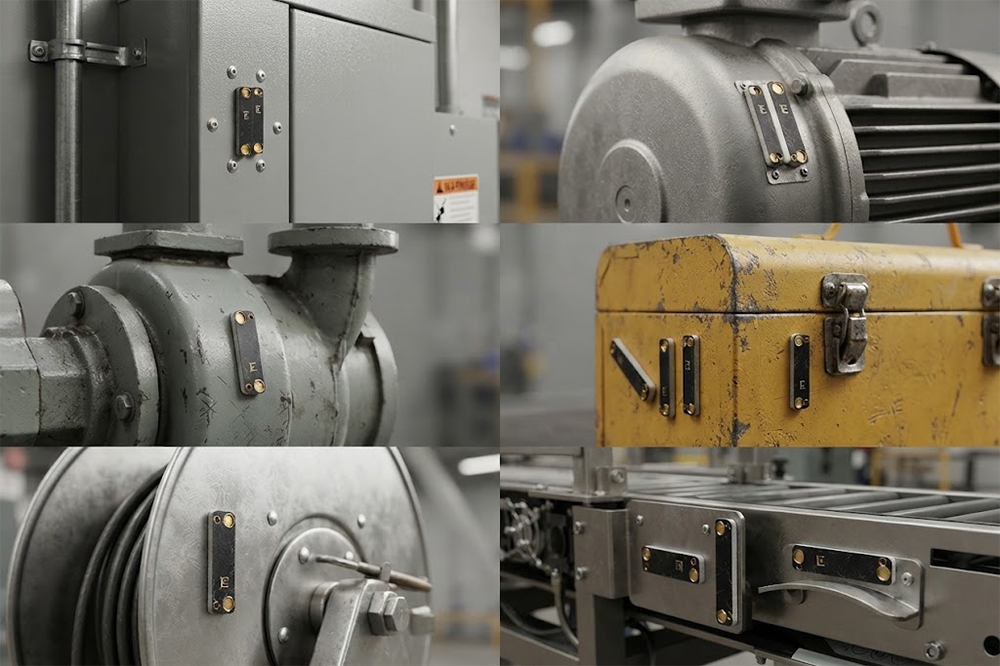
Harsh Conditions at Energy Facilities
Power plants and substations may expose RFID equipment and tags to conditions that are more demanding than a normal warehouse.Possible factors include:
- Dust and dirt
- Moisture and rain
- High or low temperatures
- Vibration
- Electromagnetic equipment
- Metal structures
- Outdoor sunlight
- Oil and industrial chemicals
- Heavy machinery
- Restricted installation space
If the installation is near high-voltage equipment or in a hazardous area, the project team must also verify the required electrical safety, environmental, and site certifications. A standard RFID reader should not automatically be assumed suitable for every power plant area.
Why Antenna Position Matters
A long range RFID scanner does not simply read every tag within a large circle. Its actual reading area depends on the antenna pattern, mounting position, reader power, tag performance, and surrounding environment.For example, a reader installed at a workshop entrance may detect assets passing through the doorway. However, if the antenna points toward an adjacent storage area, it may also read tags that are not supposed to be included in the event.
A controlled reading zone can be created by adjusting:
- Antenna direction
- Antenna height
- Antenna angle
- Reader output power
- Distance from the asset
- Physical barriers
- Lane or doorway layout
- Trigger sensors
- Software filtering
Tracking Equipment Between Warehouses and Substations
Energy companies often move tools, spare parts, and equipment between several locations:Central warehouse → maintenance workshop → substation → field service area → return warehouse
RFID can record these movements when readers are installed at suitable points.
For example, a tagged transformer component may be detected when it leaves the warehouse, arrives at a service workshop, and returns after maintenance. The software can compare the expected movement with the actual detection history.
This can help answer practical questions:
- Where was the equipment last detected?
- Has the item returned from maintenance?
- Which tools are currently assigned to a service team?
- Which spare parts left the warehouse?
- Which assets remain at a remote substation?
- Was the correct equipment delivered to the work area?
Can RFID Read Multiple Power Plant Assets?
UHF RFID technology can identify multiple tags within a reading zone. This makes it useful for tool carts, equipment cases, spare parts bins, and groups of maintenance assets.However, actual performance depends on:
- Number of tags
- Tag spacing
- Tag orientation
- Metal surfaces
- Reading distance
- Antenna position
- Reader power
- Asset movement speed
- Nearby electrical equipment
- Software filtering
- Whether tags are stacked or enclosed
For this reason, testing should use the actual equipment, tag type, cart design, and movement process rather than relying only on a laboratory demonstration.
RFID and Power Plant Asset Management Software
The RFID reader produces tag identification data. The software connects that data to operational meaning.Depending on the project, the system may integrate with:
- Maintenance management software
- Enterprise asset management systems
- Warehouse management systems
- ERP platforms
- Inventory databases
- Work order systems
- Substation management platforms
- Access control systems
- Digital inspection platforms
For example, the software may apply rules such as:
- A tool detected at the workshop entrance is marked as received.
- A spare part detected at the warehouse gate is marked as dispatched.
- An asset detected at a maintenance area is linked to an open work order.
- A tool detected twice within a short period is treated as one movement event.
- A tag detected in an unexpected area creates an alert for review.