
Long range RFID scanner can help logistics companies automatically identify pallets, cartons, containers, and shipments as they move through warehouses and distribution points. By combining UHF RFID readers, antennas, tags, and logistics software, companies can reduce manual scanning and improve shipment visibility.
shipment can be in the warehouse and still be difficult to track.
The database says it arrived.
The truck driver says it was unloaded.
The warehouse team says they moved it somewhere near Dock 4.
Then someone asks:
“Where is pallet 1837 now?”
That is the kind of situation where RFID can become useful.
A long range RFID scanner can automatically identify tagged pallets, cartons, containers, or other logistics units as they pass through specific points in the supply chain.
Instead of relying entirely on manual barcode scanning, the system can collect identification data while products are moving.
But there is an important detail here.
RFID does not magically know where a shipment is.
The system knows that a tag was detected at a particular reader, antenna, or checkpoint.
That distinction is important when designing a real logistics tracking system.
Supplier → inbound dock → warehouse → picking area → outbound dock → truck → distribution center → customer
RFID readers can be installed at selected checkpoints.
For example:
The system can then update the shipment status.
This creates a series of location events.
It is a relatively simple concept, but it can be quite powerful when there are thousands of shipments moving every day.
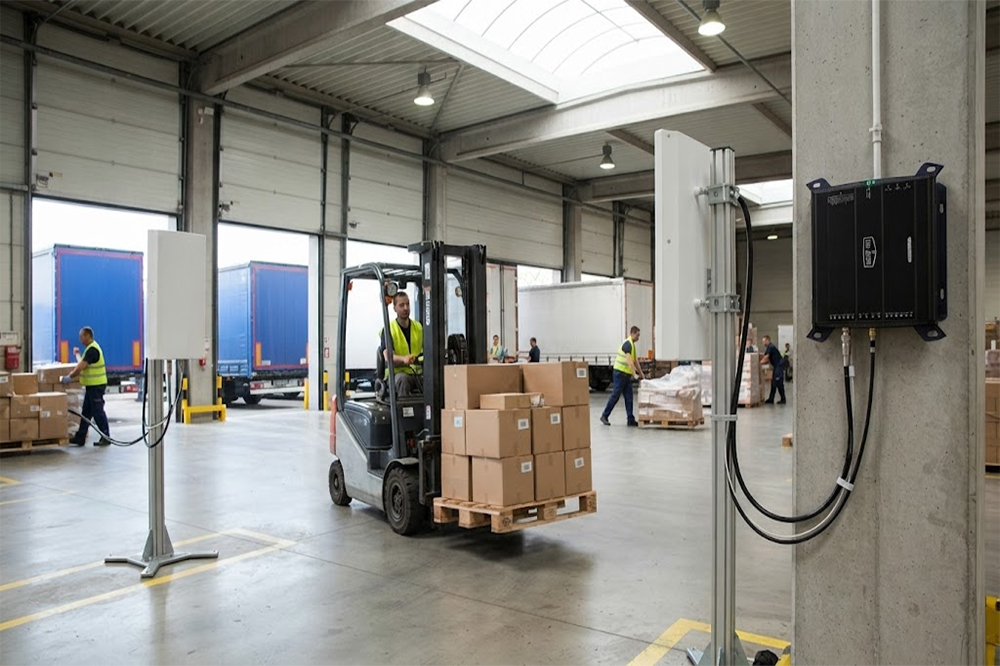
Logistics operations don’t always provide that luxury.
A forklift may move a pallet through a loading area.
A truck may be waiting.
The warehouse team may have several pallets ready for shipment.
Stopping to scan every barcode can slow the process.
With UHF RFID, multiple tags can be detected as products pass through a reading zone.
The operator can potentially continue working without individually presenting every barcode to a scanner.
That is one of the practical reasons logistics companies consider long range RFID scanners.
A truck arrives at the warehouse.
Several pallets are unloaded.
Each pallet or carton carries RFID tag.
As the shipment passes through the inbound RFID checkpoint, the reader collects the EPC numbers.
The logistics software can compare those EPCs with the expected shipment.
For example:
Expected: 120 cartons
Detected: 118 cartons
That immediately gives the warehouse team something to investigate.
Maybe two cartons remain on the truck.
Maybe two tags were damaged.
Maybe the shipment data was incorrect.
RFID does not solve every problem automatically, but it can make these exceptions visible much earlier.
A warehouse prepares an order.
The cartons or pallets are staged for shipment.
They pass through RFID gate.
The system identifies the tags and associates them with the outbound order.
This can help answer:
Was the correct shipment loaded?
Was anything left behind?
Did the pallet go through the correct gate?
When did the shipment leave the warehouse?
For high-volume logistics operations, having these events recorded automatically can be useful.
A loading dock may have several pallets waiting nearby.
If the reader detects everything within a very large area, the software may receive tags from shipments that have not actually passed the checkpoint.
That’s not useful.
The system should ideally create a controlled reading zone.
A directional antenna can help focus RF coverage toward the desired passage.
Reader power can also be adjusted.
Physical separation between staging areas and the RFID gate may help.
Software filtering provides another layer of control.
The objective isn’t maximum range.
It is correct event detection.
A company may assign:
One tag per pallet
or:
One tag per carton
or even:
One tag per individual product
These approaches produce very different amounts of RFID data.
One pallet-level tag gives a relatively simple tracking system.
Carton-level tagging provides more detail.
Item-level tagging provides even more information, but also increases the number of tags the reader needs to process.
Before choosing a long range RFID scanner, the integrator should understand the customer’s tagging strategy.
They shouldn’t always be.
Pallet tracking answers:
Where is this pallet?
Shipment tracking may involve:
Which cartons belong to this shipment?
Has the shipment been completely loaded?
Which truck received it?
Which distribution point handled it?
A single shipment may contain several pallets.
So the software needs to understand the relationship between:
RFID tag → carton → pallet → order → shipment → destination
The reader provides the identification data.
The software creates the business relationship.
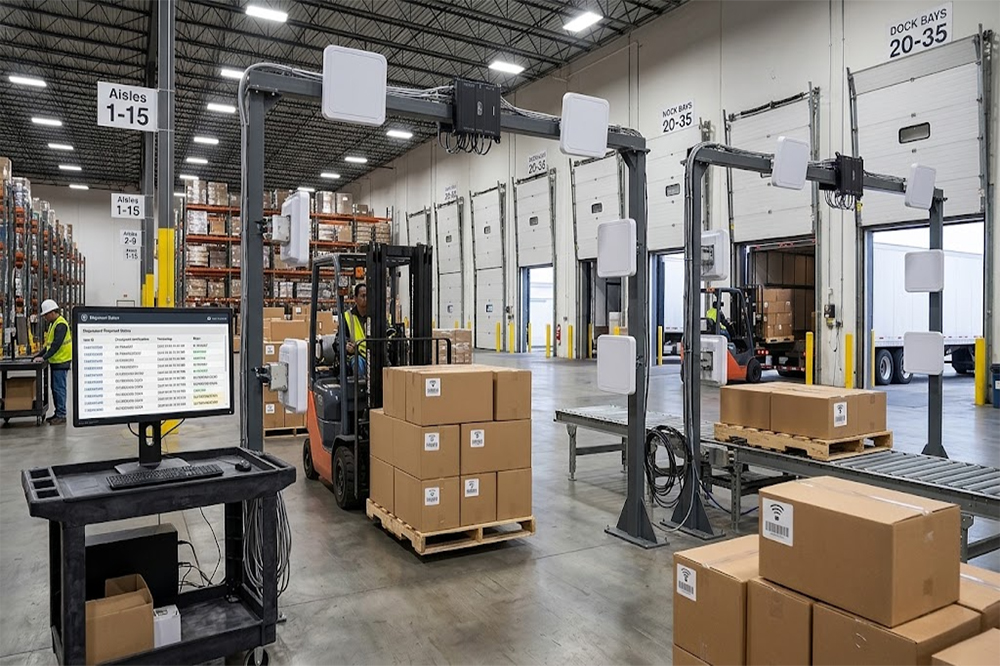
Rfid antenna installed too low may miss tags on taller loads.
Antenna angle also matters.
For a loading dock, the ideal position depends on the pallet dimensions, tag location, forklift direction, gate width, and surrounding structures.
There isn’t a universal mounting height that works everywhere.
This is why sample testing at the customer’s site is valuable.
A small physical change can sometimes improve performance more than changing to a more expensive reader.
The pallet may:
A laboratory test with a stationary pallet may look excellent.
The same system can behave differently when a loaded forklift passes through at an angle.
For this reason, I would always include real forklift movement in acceptance testing.
For example:
If tags are mounted on metal containers or vehicles, standard RFID labels may not be appropriate.
Specialized on-metal tags may be required.
Again, the tag and reader should be treated as a pair rather than two completely separate purchasing decisions.
Steel racks.
Forklifts.
Loading equipment.
Metal containers.
Machinery.
Some products themselves may be metal.
RFID performance can change significantly around these materials.
If a customer handles metal products, the integrator should test the intended RFID tag on the actual product.
Don’t assume a normal adhesive RFID label will perform the same way on every surface.
Suppose two forklifts enter the same loading zone.
Both carry RFID-tagged pallets.
The reader may detect tags from both.
Technically, the reader is doing its job.
The application now needs to determine what happened.
This is where lane design, antenna placement, timing, and software logic become important.
If each lane has its own RFID reader or controlled antenna zone, event identification can become easier.
For busy logistics facilities, the physical workflow should be considered before the RFID hardware is installed.
shipment can be in the warehouse and still be difficult to track.
The database says it arrived.
The truck driver says it was unloaded.
The warehouse team says they moved it somewhere near Dock 4.
Then someone asks:
“Where is pallet 1837 now?”
That is the kind of situation where RFID can become useful.
A long range RFID scanner can automatically identify tagged pallets, cartons, containers, or other logistics units as they pass through specific points in the supply chain.
Instead of relying entirely on manual barcode scanning, the system can collect identification data while products are moving.
But there is an important detail here.
RFID does not magically know where a shipment is.
The system knows that a tag was detected at a particular reader, antenna, or checkpoint.
That distinction is important when designing a real logistics tracking system.
Where RFID Fits Into Logistics
A typical shipment may pass through several stages:Supplier → inbound dock → warehouse → picking area → outbound dock → truck → distribution center → customer
RFID readers can be installed at selected checkpoints.
For example:
- Receiving entrance
- Warehouse gate
- Production area
- Loading dock
- Shipping checkpoint
- Return processing area
The system can then update the shipment status.
This creates a series of location events.
It is a relatively simple concept, but it can be quite powerful when there are thousands of shipments moving every day.
RFID Is Particularly Useful When Products Move Quickly
Manual scanning works well when workers have time to stop.Logistics operations don’t always provide that luxury.
A forklift may move a pallet through a loading area.
A truck may be waiting.
The warehouse team may have several pallets ready for shipment.
Stopping to scan every barcode can slow the process.
With UHF RFID, multiple tags can be detected as products pass through a reading zone.
The operator can potentially continue working without individually presenting every barcode to a scanner.
That is one of the practical reasons logistics companies consider long range RFID scanners.
Inbound Shipment Tracking
Let’s look at receiving first.A truck arrives at the warehouse.
Several pallets are unloaded.
Each pallet or carton carries RFID tag.
As the shipment passes through the inbound RFID checkpoint, the reader collects the EPC numbers.
The logistics software can compare those EPCs with the expected shipment.
For example:
Expected: 120 cartons
Detected: 118 cartons
That immediately gives the warehouse team something to investigate.
Maybe two cartons remain on the truck.
Maybe two tags were damaged.
Maybe the shipment data was incorrect.
RFID does not solve every problem automatically, but it can make these exceptions visible much earlier.
Outbound Tracking Works in a Similar Way
Outbound operations can use the same concept.A warehouse prepares an order.
The cartons or pallets are staged for shipment.
They pass through RFID gate.
The system identifies the tags and associates them with the outbound order.
This can help answer:
Was the correct shipment loaded?
Was anything left behind?
Did the pallet go through the correct gate?
When did the shipment leave the warehouse?
For high-volume logistics operations, having these events recorded automatically can be useful.
The Reading Zone Needs to Match the Workflow
This is where the long range part of an RFID scanner needs some thought.A loading dock may have several pallets waiting nearby.
If the reader detects everything within a very large area, the software may receive tags from shipments that have not actually passed the checkpoint.
That’s not useful.
The system should ideally create a controlled reading zone.
A directional antenna can help focus RF coverage toward the desired passage.
Reader power can also be adjusted.
Physical separation between staging areas and the RFID gate may help.
Software filtering provides another layer of control.
The objective isn’t maximum range.
It is correct event detection.
One Shipment Can Have Many RFID Tags
This depends on the customer’s tracking model.A company may assign:
One tag per pallet
or:
One tag per carton
or even:
One tag per individual product
These approaches produce very different amounts of RFID data.
One pallet-level tag gives a relatively simple tracking system.
Carton-level tagging provides more detail.
Item-level tagging provides even more information, but also increases the number of tags the reader needs to process.
Before choosing a long range RFID scanner, the integrator should understand the customer’s tagging strategy.
Pallet Tracking and Shipment Tracking Are Not Exactly the Same
These terms are sometimes used interchangeably.They shouldn’t always be.
Pallet tracking answers:
Where is this pallet?
Shipment tracking may involve:
Which cartons belong to this shipment?
Has the shipment been completely loaded?
Which truck received it?
Which distribution point handled it?
A single shipment may contain several pallets.
So the software needs to understand the relationship between:
RFID tag → carton → pallet → order → shipment → destination
The reader provides the identification data.
The software creates the business relationship.
RFID Antenna Position Can Affect Logistics Accuracy
RFID antenna installed too high may produce an unwanted reading area.Rfid antenna installed too low may miss tags on taller loads.
Antenna angle also matters.
For a loading dock, the ideal position depends on the pallet dimensions, tag location, forklift direction, gate width, and surrounding structures.
There isn’t a universal mounting height that works everywhere.
This is why sample testing at the customer’s site is valuable.
A small physical change can sometimes improve performance more than changing to a more expensive reader.
Forklift Movement Is Part of the RFID System
In logistics, the forklift is effectively part of the test environment.The pallet may:
- Move straight
- Approach at an angle
- Stop inside the gate
- Move slowly
- Move quickly
- Turn while entering
A laboratory test with a stationary pallet may look excellent.
The same system can behave differently when a loaded forklift passes through at an angle.
For this reason, I would always include real forklift movement in acceptance testing.
What About Trucks and Containers?
Long range RFID scanners can also support larger logistics assets.For example:
- Truck loading
- Container identification
- Returnable transport items
- Cargo pallets
- Reusable containers
- Warehouse carts
If tags are mounted on metal containers or vehicles, standard RFID labels may not be appropriate.
Specialized on-metal tags may be required.
Again, the tag and reader should be treated as a pair rather than two completely separate purchasing decisions.
Metal Is Common Logistics Challenge
Distribution centers often contain plenty of metal.Steel racks.
Forklifts.
Loading equipment.
Metal containers.
Machinery.
Some products themselves may be metal.
RFID performance can change significantly around these materials.
If a customer handles metal products, the integrator should test the intended RFID tag on the actual product.
Don’t assume a normal adhesive RFID label will perform the same way on every surface.
What Happens When Two Shipments Pass Together?
This is another practical situation.Suppose two forklifts enter the same loading zone.
Both carry RFID-tagged pallets.
The reader may detect tags from both.
Technically, the reader is doing its job.
The application now needs to determine what happened.
This is where lane design, antenna placement, timing, and software logic become important.
If each lane has its own RFID reader or controlled antenna zone, event identification can become easier.
For busy logistics facilities, the physical workflow should be considered before the RFID hardware is installed.