
Choosing a long range RFID scanner is not simply about finding the reader with the longest claimed distance. For most RFID projects, frequency, chipset, sensitivity, antenna ports, protocol support, communication interfaces, tag type, reading-zone requirements, and software integration should be considered together.
A customer asks:
“Can you give me a long range RFID scanner with 20-meter reading distance?”
It sounds like a simple request.
It isn’t.
Before choosing the reader, I would want to know what they are actually trying to read.
A pallet?
A carton?
A vehicle?
Clothing?
Industrial tools?
A metal container?
And where will the reader be installed?
A warehouse door and a production line can require completely different RFID setups, even if both customers ask for a “long range RFID scanner.”
This is where RFID specifications start to matter.
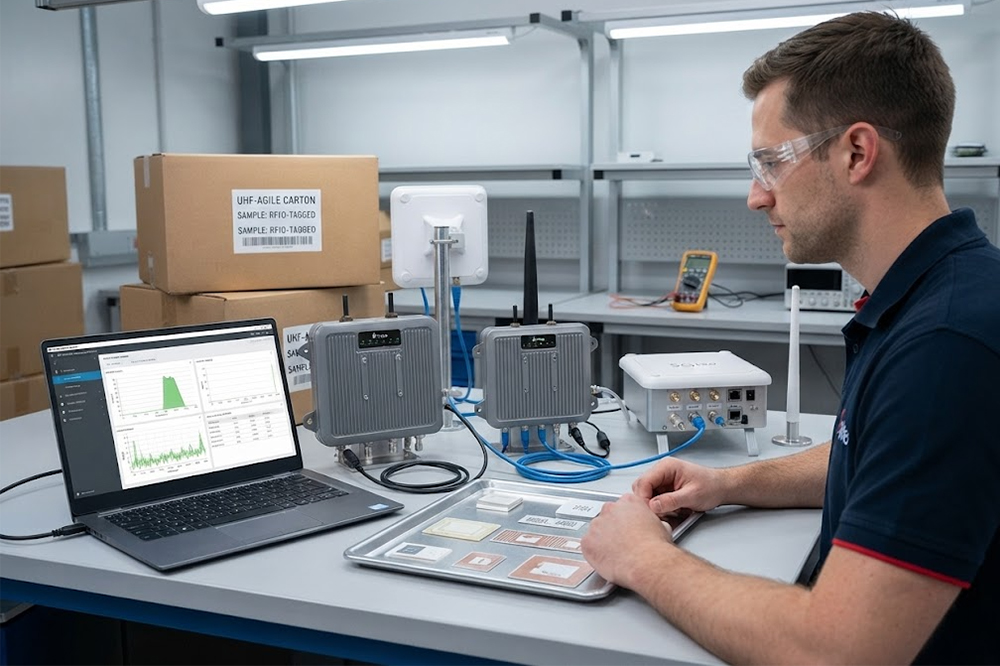
Frequency.
Power.
Sensitivity.
Antenna ports.
Reading distance.
Communication interface.
It looks straightforward.
But those numbers don’t mean much without the application.
For example, a reader with eight antenna ports may be unnecessary for a small inventory station.
On the other hand, a four-port reader might not be enough for a large loading gate requiring multiple antennas.
So the first question should be:
What does the RFID system need to do?
Only then should you choose the hardware.
However, frequency requirements vary by market.
A reader may support a range such as:
840–960 MHz
with regional frequency settings.
For an RFID distributor selling internationally, this matters.
A reader suitable for one region may need different configuration or compliance for another market.
So when a customer says:
“We need UHF RFID.”
that is not quite enough information.
The target market should also be confirmed.
For many UHF RFID projects, EPC Class 1 Gen 2 / ISO 18000-6C compatibility is important.
Some readers also support other RFID protocols.
Why does this matter?
Because the reader needs to communicate with the tags used in the project.
A distributor may have a customer who already purchased RFID tags.
Before recommending the reader, confirm what those tags support.
It is a small question that can prevent a surprisingly annoying compatibility problem.
A product page may say:
Reading distance: up to 20 meters.
A buyer may assume that every tag will be detected at 20 meters.
That is not how RFID works.
Actual reading distance can depend on:
So “20 meters” should usually be treated as a reference rather than a guaranteed distance for every application.
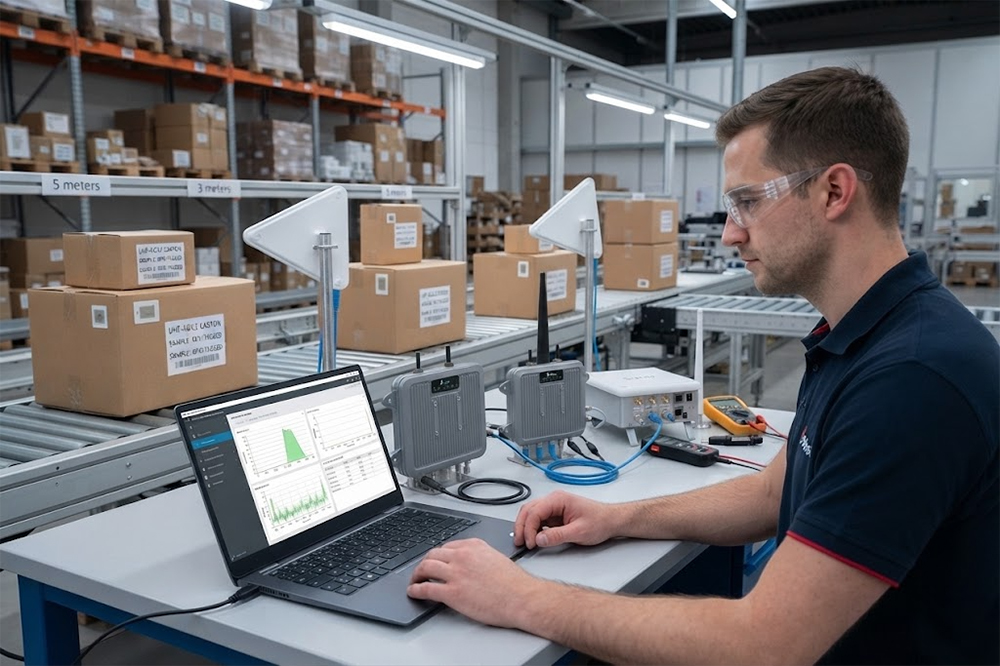
A high-performance reader connected to an unsuitable antenna may not deliver the expected result.
For long range applications, directional antennas are often useful because they focus energy toward a particular area.
For example, imagine a warehouse entrance.
The customer wants to identify pallets passing through one lane.
A directional antenna aimed at the lane may be more practical than an antenna providing broad coverage in every direction.
This also helps reduce unwanted reads.
Readers may come with different numbers of antenna ports.
For example:
A single reading point may only need one or two antennas.
A large gate could require several antennas to cover different directions.
More ports can provide greater installation flexibility, but they also increase system complexity and cost.
Don’t automatically recommend the highest-port model.
But sensitivity affects the reader’s ability to detect weaker tag signals.
For example, a specification such as:
Sensitivity: -85 dBm
can indicate strong receiver performance.
However, sensitivity should not be viewed alone.
Real-world performance still depends on the tag, antenna, environment, and installation.
If a customer is trying to read small tags from relatively long distances, sensitivity becomes a specification worth discussing.
Some UHF readers use established RFID chipsets such as Impinj E710 or other industry-recognized platforms.
Why should a distributor care?
Because chipset choice can influence:
For an RFID solution provider, it can be an important part of technical evaluation.
That might be a warehouse management system.
A local computer.
A cloud platform.
An industrial controller.
Or custom software.
Common interfaces can include:
For example, a fixed warehouse reader may rely heavily on Ethernet.
A portable system may have different requirements.
Before purchasing in bulk, confirm what the customer’s software team actually needs.
Suppose a logistics company already has its own warehouse software.
The RFID reader detects:
EPC 300833B2DDD9014000000001
The customer’s software needs to know what that EPC represents.
The integration layer might connect the RFID data to:
Pallet → Shipment → Warehouse location → Customer
Without a workable integration method, the reader is basically isolated hardware.
For RFID system integrators, API and SDK availability can therefore be a major purchasing factor.
Sometimes the best solution uses both.
A fixed reader can track movement at the door while handheld equipment handles inventory checks inside the warehouse.
Cardboard cartons are relatively straightforward.
Plastic containers are also common.
Metal products are different.
Liquids can be different again.
A customer tracking automotive parts may need RFID tags specifically designed for metal surfaces.
A retailer tracking clothing may use lightweight RFID labels.
A logistics company tracking reusable plastic bins may have another requirement.
So don’t quote the reader before asking about the tagged object.
A tag facing the antenna may perform well.
Turn it sideways.
Put another box in front of it.
Attach it to a metal surface.
The reading result can change.
This is why an RFID project should include real-world testing.
If a customer says:
“We need 15 meters.”
the next question should be:
“What is the tag size and where will it be installed?”
That question is often more useful than discussing another decimal place in the reader specifications.
A customer asks:
“Can you give me a long range RFID scanner with 20-meter reading distance?”
It sounds like a simple request.
It isn’t.
Before choosing the reader, I would want to know what they are actually trying to read.
A pallet?
A carton?
A vehicle?
Clothing?
Industrial tools?
A metal container?
And where will the reader be installed?
A warehouse door and a production line can require completely different RFID setups, even if both customers ask for a “long range RFID scanner.”
This is where RFID specifications start to matter.
Start With the Application, Not the Reader Model
When buying RFID hardware, it is easy to open a product catalog and compare numbers.Frequency.
Power.
Sensitivity.
Antenna ports.
Reading distance.
Communication interface.
It looks straightforward.
But those numbers don’t mean much without the application.
For example, a reader with eight antenna ports may be unnecessary for a small inventory station.
On the other hand, a four-port reader might not be enough for a large loading gate requiring multiple antennas.
So the first question should be:
What does the RFID system need to do?
Only then should you choose the hardware.
1. Check the RFID Frequency
For long range applications, UHF RFID is commonly used because it can provide relatively long-distance tag identification and support multiple-tag reading.However, frequency requirements vary by market.
A reader may support a range such as:
840–960 MHz
with regional frequency settings.
For an RFID distributor selling internationally, this matters.
A reader suitable for one region may need different configuration or compliance for another market.
So when a customer says:
“We need UHF RFID.”
that is not quite enough information.
The target market should also be confirmed.
2. Look at Protocol Compatibility
Protocol support is another basic specification.For many UHF RFID projects, EPC Class 1 Gen 2 / ISO 18000-6C compatibility is important.
Some readers also support other RFID protocols.
Why does this matter?
Because the reader needs to communicate with the tags used in the project.
A distributor may have a customer who already purchased RFID tags.
Before recommending the reader, confirm what those tags support.
It is a small question that can prevent a surprisingly annoying compatibility problem.
3. Reading Distance Is Important—but Don’t Read the Number Too Literally
This is probably the most misunderstood RFID specification.A product page may say:
Reading distance: up to 20 meters.
A buyer may assume that every tag will be detected at 20 meters.
That is not how RFID works.
Actual reading distance can depend on:
- RFID tag design
- Tag size
- Tag orientation
- Reader power
- Antenna gain
- Antenna direction
- Product material
- Installation height
- Surrounding RF environment
So “20 meters” should usually be treated as a reference rather than a guaranteed distance for every application.
4. Antenna Gain Changes the Result
The RFID reader and antenna work together.A high-performance reader connected to an unsuitable antenna may not deliver the expected result.
For long range applications, directional antennas are often useful because they focus energy toward a particular area.
For example, imagine a warehouse entrance.
The customer wants to identify pallets passing through one lane.
A directional antenna aimed at the lane may be more practical than an antenna providing broad coverage in every direction.
This also helps reduce unwanted reads.
5. How Many Antenna Ports Do You Need?
This is a specification that RFID distributors should pay close attention to.Readers may come with different numbers of antenna ports.
For example:
- 1–2 ports
- 4 ports
- 8 ports
- 16 ports
A single reading point may only need one or two antennas.
A large gate could require several antennas to cover different directions.
More ports can provide greater installation flexibility, but they also increase system complexity and cost.
Don’t automatically recommend the highest-port model.
6. RFID Sensitivity Matters
Sensitivity is easy to overlook because customers often focus on reading distance.But sensitivity affects the reader’s ability to detect weaker tag signals.
For example, a specification such as:
Sensitivity: -85 dBm
can indicate strong receiver performance.
However, sensitivity should not be viewed alone.
Real-world performance still depends on the tag, antenna, environment, and installation.
If a customer is trying to read small tags from relatively long distances, sensitivity becomes a specification worth discussing.
7. Chipset Can Be Relevant for B2B Buyers
For professional RFID projects, the chipset can matter.Some UHF readers use established RFID chipsets such as Impinj E710 or other industry-recognized platforms.
Why should a distributor care?
Because chipset choice can influence:
- RF performance
- Tag handling
- Reader stability
- Development support
- Software integration
- Project positioning
For an RFID solution provider, it can be an important part of technical evaluation.
8. Check the Communication Interface
The RFID reader needs to send tag data somewhere.That might be a warehouse management system.
A local computer.
A cloud platform.
An industrial controller.
Or custom software.
Common interfaces can include:
- Ethernet
- TCP/IP
- USB
- RS232
- RS485
- Wi-Fi
- Other network interfaces
For example, a fixed warehouse reader may rely heavily on Ethernet.
A portable system may have different requirements.
Before purchasing in bulk, confirm what the customer’s software team actually needs.
9. API and SDK Support
This can become very important in larger RFID projects.Suppose a logistics company already has its own warehouse software.
The RFID reader detects:
EPC 300833B2DDD9014000000001
The customer’s software needs to know what that EPC represents.
The integration layer might connect the RFID data to:
Pallet → Shipment → Warehouse location → Customer
Without a workable integration method, the reader is basically isolated hardware.
For RFID system integrators, API and SDK availability can therefore be a major purchasing factor.
10. Fixed or Handheld?
The term “long range RFID scanner” can refer to different hardware formats.Fixed RFID Reader
Useful for:- Warehouse gates
- Loading docks
- Production lines
- Conveyor systems
- Retail entrances
- Automated checkpoints
Handheld RFID Scanner
Useful for:- Inventory counting
- Product searching
- Warehouse stock checks
- Retail inventory
- Asset locating
Sometimes the best solution uses both.
A fixed reader can track movement at the door while handheld equipment handles inventory checks inside the warehouse.
11. What Kind of Products Are Being Tagged?
This question can completely change the reader recommendation.Cardboard cartons are relatively straightforward.
Plastic containers are also common.
Metal products are different.
Liquids can be different again.
A customer tracking automotive parts may need RFID tags specifically designed for metal surfaces.
A retailer tracking clothing may use lightweight RFID labels.
A logistics company tracking reusable plastic bins may have another requirement.
So don’t quote the reader before asking about the tagged object.
12. Tag Orientation Can Change Everything
RFID tags are not equally effective from every angle.A tag facing the antenna may perform well.
Turn it sideways.
Put another box in front of it.
Attach it to a metal surface.
The reading result can change.
This is why an RFID project should include real-world testing.
If a customer says:
“We need 15 meters.”
the next question should be:
“What is the tag size and where will it be installed?”
That question is often more useful than discussing another decimal place in the reader specifications.