
How is RFID used in retail? RFID is used in retail by attaching electronic tags to products and using RFID readers to automate inventory tracking, improve checkout efficiency, manage product information, and create smarter shopping experiences.
RFID has changed retail operations by transforming individual products into connected digital assets. Instead of relying only on manual barcode scanning, retailers can identify, track, and manage thousands of items through wireless communication technology.
In Cykeo retail solution projects, engineers often find that the biggest improvement does not come from replacing scanners. It comes from redesigning the entire product management process. A product entering a store, moving to a shelf, being purchased, and leaving the checkout area can become part of one connected data flow.
According to GS1, RFID based on EPC standards is widely adopted in retail supply chains to improve product visibility and inventory management.
For modern retailers, RFID is becoming an important foundation for smart stores, unmanned shops, automated checkout systems, and real-time inventory control.
A retail RFID system normally includes four key elements:
The workflow is:
This allows retailers to manage products in situations where speed matters:
Traditional inventory management often depends on manual counting. Employees walk through stores, check products, and update records. This process takes time and can introduce errors.
RFID creates a different workflow.
A store employee using an RFID handheld reader or fixed RFID system can quickly identify tagged products and update inventory information.
Common applications include:
Typical RFID inventory applications include:
Traditional checkout requires:
Customers can place multiple RFID-tagged products on a reading platform. The system identifies items automatically, displays purchase information, and supports faster payment.
Cykeo RFID retail checkout platforms combine:
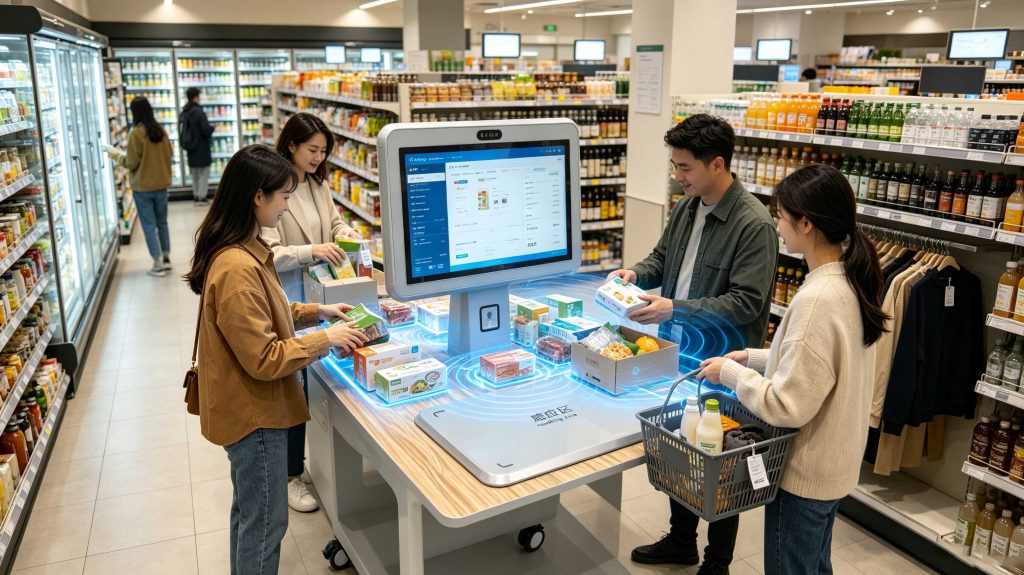 RFID technology enables faster product recognition and automated retail checkout experiences.
The technology creates visibility across the entire supply chain.
A typical RFID retail journey:
Manufacturer → Distribution Center → Store → Shelf → Checkout → Inventory Database
At each stage, RFID helps businesses understand product movement.
Applications include:
This connected approach helps retailers reduce information gaps between physical products and digital systems.
RFID systems can support:
This creates a smoother customer experience while supporting store protection.
Retail projects involve more than installing RFID readers. Engineers must consider:
In practical applications, the best RFID system is the one that disappears into the workflow. Customers see a simple checkout process. Store managers see accurate data. Behind both experiences is a carefully designed RFID identification architecture.
RFID has changed retail operations by transforming individual products into connected digital assets. Instead of relying only on manual barcode scanning, retailers can identify, track, and manage thousands of items through wireless communication technology.
In Cykeo retail solution projects, engineers often find that the biggest improvement does not come from replacing scanners. It comes from redesigning the entire product management process. A product entering a store, moving to a shelf, being purchased, and leaving the checkout area can become part of one connected data flow.
According to GS1, RFID based on EPC standards is widely adopted in retail supply chains to improve product visibility and inventory management.
For modern retailers, RFID is becoming an important foundation for smart stores, unmanned shops, automated checkout systems, and real-time inventory control.
Understanding How Is RFID Used in Retail Systems
When people ask how is RFID used in retail, the answer begins with product identification.A retail RFID system normally includes four key elements:
| RFID Component | Retail Function |
|---|---|
| RFID Tag | Stores unique product identification data |
| RFID Reader | Reads product information wirelessly |
| Antenna System | Creates RFID communication coverage |
| Retail Software | Processes inventory and sales information |
- Products receive RFID tags during manufacturing or warehouse preparation.
- RFID readers collect product information automatically.
- Data is transmitted to retail management software.
- Inventory, sales, and product status are updated.
This allows retailers to manage products in situations where speed matters:
- Busy checkout periods
- Large inventory counts
- Warehouse receiving
- Store replenishment
- Loss prevention management
RFID Applications in Retail Inventory Management
Inventory accuracy is one of the strongest reasons retailers adopt RFID technology.Traditional inventory management often depends on manual counting. Employees walk through stores, check products, and update records. This process takes time and can introduce errors.
RFID creates a different workflow.
A store employee using an RFID handheld reader or fixed RFID system can quickly identify tagged products and update inventory information.
Common applications include:
Real-Time Product Visibility
Retailers can understand:- What products are available
- Where products are located
- Which items need replenishment
- Which products have moved
Automated Stock Management
RFID allows businesses to reduce manual inventory operations.Typical RFID inventory applications include:
- Warehouse receiving
- Shelf monitoring
- Stock checking
- Distribution management
- Store transfer tracking
How RFID Improves Retail Checkout Experience
Retail checkout is one of the most visible RFID applications.Traditional checkout requires:
- Finding the barcode
- Aligning the scanner
- Scanning each item separately
Customers can place multiple RFID-tagged products on a reading platform. The system identifies items automatically, displays purchase information, and supports faster payment.
Cykeo RFID retail checkout platforms combine:
- UHF RFID multi-tag reading
- Touchscreen interaction
- Product information display
- Payment process support
- Security status management
- Self-service supermarkets
- Unmanned stores
- Chain retail outlets
- Pharmacy environments
RFID Product Tracking Throughout the Retail Supply Chai
Retail RFID is not limited to stores.The technology creates visibility across the entire supply chain.
A typical RFID retail journey:
Manufacturer → Distribution Center → Store → Shelf → Checkout → Inventory Database
At each stage, RFID helps businesses understand product movement.
Applications include:
| Retail Stage | RFID Usage |
|---|---|
| Manufacturing | Product identification |
| Warehouse | Receiving and sorting |
| Transportation | Shipment tracking |
| Store | Inventory management |
| Checkout | Automated payment processing |
RFID Security and Loss Prevention in Retail
Retail security is another important RFID application.RFID systems can support:
- Product identification
- Security tag management
- Exit monitoring
- Purchase verification
This creates a smoother customer experience while supporting store protection.
Cykeo Experience in RFID Retail Implementation
Cykeo develops RFID solutions based on real operational environments.Retail projects involve more than installing RFID readers. Engineers must consider:
- Product materials
- Store layout
- Customer behavior
- Reading distance
- Software integration
In practical applications, the best RFID system is the one that disappears into the workflow. Customers see a simple checkout process. Store managers see accurate data. Behind both experiences is a carefully designed RFID identification architecture.