
How does rfid technology work?
RFID technology works by using radio frequency signals to exchange data between RFID tags and readers. The reader sends energy and commands, the tag responds with stored identification information, and software converts this data into useful tracking and management information.Understanding RFID Technology From Real Deployment Experience
When people search how does rfid technology work, they often expect a simple explanation: a tag is scanned, and information appears.In real industrial projects, the process involves much more than scanning.
I have participated in RFID system evaluations and deployments involving manufacturing equipment, warehouse inventory, logistics containers, and industrial tools. The most common mistake I see is treating RFID as a replacement for barcode scanning.
RFID is not simply a faster barcode.
It creates a wireless communication system between physical objects and digital platforms.
During one factory deployment, the customer needed to monitor hundreds of maintenance tools moving between production lines. The first test focused only on reading distance. However, the real challenge appeared when workers placed metal tools together in storage cabinets.
The RFID tags could be detected, but signal performance changed because metal surfaces influenced radio frequency behavior.
The final solution required:
- Selecting suitable RFID tag materials
- Adjusting reader antenna positions
- Defining controlled reading zones
- Optimizing software filtering rules
RFID performance depends on system design, not only on RFID hardware specifications.
According to GS1, RFID enables automatic identification by using radio waves to communicate information stored in electronic tags, helping businesses improve visibility across supply chains.
How RFID Technology Communicates Between Tags and Readers
The basic RFID working process
An RFID system normally contains three core elements:| Component | Function |
|---|---|
| RFID Tag | Stores identification information |
| RFID Reader | Sends signals and collects tag data |
| Software Platform | Processes and manages information |
RFID communication workflow:
- RFID reader transmits a radio frequency signal.
- RFID tag antenna receives the signal.
- RFID chip activates and processes stored data.
- Tag sends identification information back.
- Reader transfers data to software systems.
A reader can identify multiple tags within its coverage area, which makes RFID valuable for warehouses, factories, and logistics operations.
How RFID Tags Receive and Send Data
The role of RFID chips and antennas
An RFID tag looks simple from the outside, but internally it contains carefully designed electronic components.The main parts include:
RFID Chip
The chip stores digital information such as:- Electronic Product Code (EPC)
- Asset identification number
- Product reference data
Antenna
The antenna allows the tag to communicate with RFID readers.Its design determines:
- Reading distance
- Frequency performance
- Environmental compatibility
Protective Material
Different environments require different protection.Examples:
| Environment | Recommended RFID Tag Type |
|---|---|
| Retail products | Paper RFID label |
| Metal equipment | On-metal RFID tag |
| Outdoor assets | Rugged waterproof RFID tag |
| Industrial tools | High-temperature RFID tag |
How Passive RFID Technology Works
Battery-free RFID communication
Most supply chain RFID applications use passive RFID tags.Passive RFID tags do not have internal batteries.
Instead, they receive energy from the RFID reader.
The process:
- Reader creates electromagnetic energy
- Tag antenna captures energy
- RFID chip activates
- Stored information is transmitted
| Benefit | Explanation |
|---|---|
| Long lifetime | No battery replacement |
| Small structure | Easy attachment |
| Lower cost | Suitable for large deployments |
| Low maintenance | Reliable long-term operation |
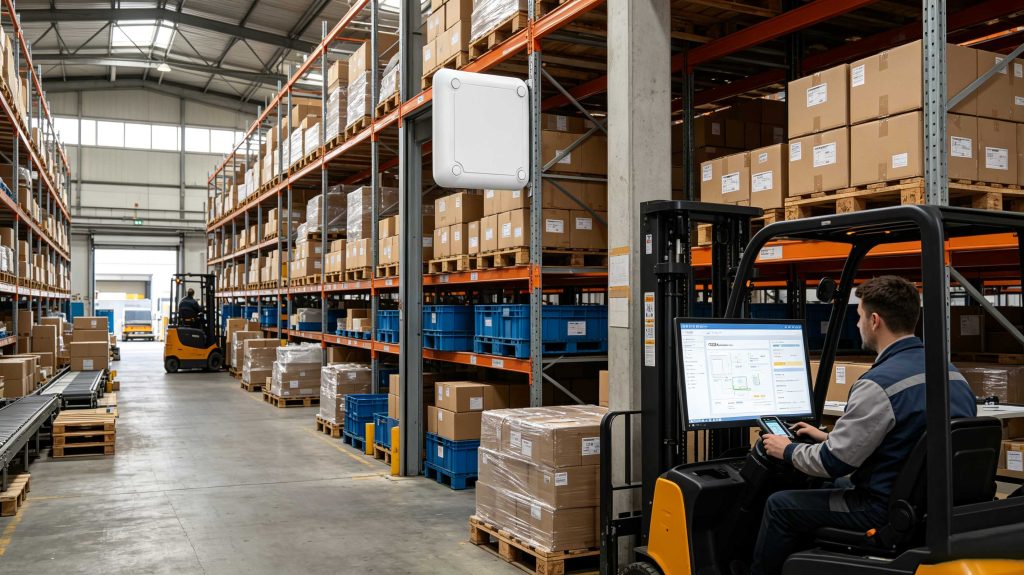
- Warehouse inventory
- Retail management
- Manufacturing tracking
- Logistics operations
How Active RFID Technology Works
Battery-powered RFID systems
Active RFID technology uses an internal battery to transmit signals.Compared with passive RFID, active RFID provides:
- Longer communication distance
- More frequent data transmission
- Additional sensor functions
- Vehicle tracking
- Large equipment monitoring
- Real-time location systems
- Battery maintenance
- Higher hardware investment
- More complex management
RFID Technology Frequency Types Explained
Different frequencies for different applications
RFID technology operates across several frequency ranges.| Frequency | Typical Applications |
|---|---|
| LF RFID | Animal identification, access control |
| HF RFID | Cards, NFC devices, document management |
| UHF RFID | Logistics, inventory, industrial tracking |
According to RFID Lab at Auburn University, RFID technology has been researched extensively for improving supply chain visibility and inventory accuracy.
Real Applications of RFID Technology
Where RFID creates business value
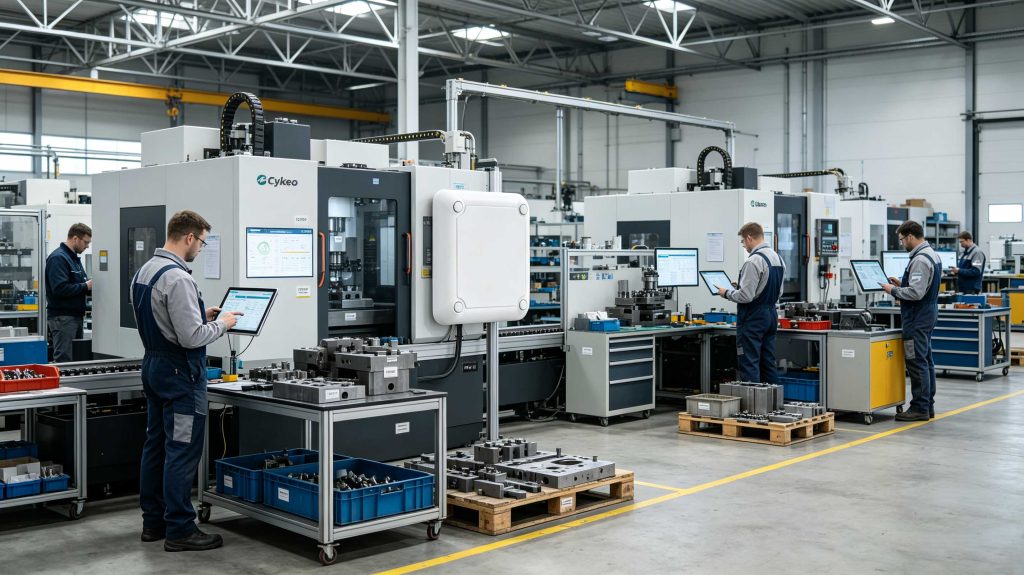
RFID technology is used across many industries:| Industry | RFID Application |
|---|---|
| Manufacturing | Production tracking |
| Logistics | Shipment visibility |
| Retail | Inventory management |
| Healthcare | Medical equipment tracking |
| Aviation | Tool management |
| Energy | Inspection management |
Instead of asking:
“Where is this product manually recorded?”
Companies can ask:
“Where was this asset detected by the RFID system?”
Cykeo RFID Technology Solutions
Building reliable identification systems
Understanding how does rfid technology work requires looking at the complete ecosystem.A successful RFID deployment combines:
- Correct tag selection
- Reliable readers
- Proper antenna design
- Software integration
RFID technology works because it creates a reliable connection between physical assets and digital information.