
rosarioalivia
Member
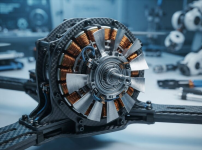
Small motors spin fast but push weakly. That mismatch is a problem for any machine that must move something heavy. A gearbox fixes it by trading speed for force, and the combined unit is called a DC gear motor. This article explains how it works and when it is the right choice.
What a DC Gear Motor Actually Does
Inside the housing, a small motor drives a set of gears. The gears reduce the speed at the output shaft and increase the torque by the same proportion, minus some losses. The result is slow, strong motion from a package that is much smaller than a large motor would be.Think of cycling uphill. You shift to a lower gear, pedal faster, and the wheel turns more slowly but with more force. The idea is the same here. The motor stays in a comfortable speed range, while the gearbox delivers what the mechanism actually needs.
Why Engineers Choose a DC Gear Motor
There are good reasons this combination is popular. Space is one. A large, slow motor would need more room and often more cost. A small motor with a gearbox fits tight layouts easily, which matters in compact equipment.Control is another reason. Because output speed is lower, the mechanism moves more gently and can be positioned more easily. In addition, the motor itself can run near its efficient speed instead of being forced to crawl. That tends to improve behavior and reduce strain.
Gear Ratio in a DC Gear Motor
The ratio tells you how much the speed drops and the torque rises. A higher ratio gives more force and slower output. A lower ratio keeps output faster with less force. Choose it by working backward from the speed and torque your mechanism needs, not by guessing.Efficiency matters as well. Every gear stage loses a little energy to friction, so very high ratios cost some efficiency. Noise and backlash can also change with the design. For that reason, testing two or three ratios during sampling is wise, since real feedback beats calculations on paper.
Where a DC Servo Motor Differs
People often confuse gear motors with servo systems, so a quick comparison helps. A gear motor focuses on torque and speed reduction. A DC servo motor adds feedback so the controller can hold an exact position or speed. The two can work together when a task needs both force and accuracy.In simple terms, a gear motor answers the question “how strong?” while a servo answers “how precise?” Many machines need only the first answer. Others need both. Knowing which camp your product belongs to prevents you from paying for features you will never use.
Steps to Specify a DC Gear Motor
Use this order when you prepare an inquiry. It keeps the conversation focused and helps engineers respond quickly.- State the supply voltage and its tolerance.
- Give the torque required at the output shaft.
- Define the output speed you want.
- Describe the duty cycle and daily running time.
- Note the size limits and mounting method.
- Mention noise limits and the working environment.
Matched Units From One Source
Buying the motor and gearbox separately can lead to alignment problems, noise, and awkward mounting. MGLORY produces DC gear motors together with micro motors and custom electric motor solutions, so the two parts are matched from the start. That simplifies assembly and usually reduces the number of revisions.Customizing a DC Gear Motor for Your Machine
Shaft length, shaft shape, lead wire length, connectors, and ratio can often be adjusted. Share drawings and targets early, and let the engineers propose a configuration. Ningbo Dexin (MGLORY) Motor Co., Ltd. has more than 15 years of experience in micro motor manufacturing, which helps when a request falls outside the standard catalog.Final Thoughts on the DC Gear Motor
A gear motor is a practical answer whenever you need strong, slow motion in a small space. Define your torque and speed, choose a sensible ratio, and test it on the real machine. If accuracy also matters, consider adding a servo system to the plan.Send your requirements to the MGLORY team and ask about custom options. Experienced engineers can help you move from a rough idea to a working sample that suits your mechanism.